| Bytes | Lang | Time | Link |
|---|---|---|---|
| 077 | Perl 5 n | 250410T154300Z | Xcali |
| 083 | AWK | 250410T151516Z | xrs |
| 017 | MATL | 160825T120055Z | Luis Men |
| 008 | Vyxal | 220602T233018Z | naffetS |
| 007 | 05AB1E | 211019T081750Z | Kevin Cr |
| 116 | Kotlin | 180407T010917Z | JohnWell |
| 135 | SHELL 135 Bytes | 180405T233104Z | Ali ISSA |
| 008 | Charcoal | 170615T123243Z | Neil |
| 046 | SmileBASIC | 170205T001419Z | 12Me21 |
| 089 | Python | 161110T005046Z | ren |
| nan | Perl | 161109T180532Z | Gabriel |
| 270 | Javascript | 160827T092343Z | Paul Sch |
| 122 | Java 7 | 160825T120550Z | Kevin Cr |
| nan | GNU sed | 160827T091954Z | seshouma |
| 212 | S.I.L.O.S | 160827T045506Z | Leaky Nu |
| 081 | Mathematica | 160827T060204Z | Greg Mar |
| 023 | Pyke | 160826T172909Z | Blue |
| 087 | Haskell | 160825T140937Z | sudee |
| 090 | Python | 160825T125355Z | Jonathan |
| 168 | VBA Excel | 160826T033202Z | Anastasi |
| 065 | Python 2 | 160825T223714Z | xnor |
| 083 | Python 2 | 160825T215837Z | xnor |
| 155 | Logo | 160825T190530Z | GuitarPi |
| 133 | PowerShell | 160825T172003Z | fuandon |
| 114 | C | 160825T115351Z | Leaky Nu |
| 025 | Pyth | 160825T162537Z | PurkkaKo |
| 101 | C# | 160825T145339Z | Scepheo |
| 137 | Scala | 160825T141514Z | AmazingD |
| 130 | Java | 160825T124512Z | Shaun Wi |
| 058 | Matlab | 160825T121118Z | flawr |
| 096 | JavaScript ES6 | 160825T123446Z | Neil |
| 102 | R | 160825T122315Z | JDL |
Perl 5 -n, 77 bytes
//,say map{$_*$'*($_-$')*($_-$b)*($'-$b)*($b-$_-$')?$":X}@;for@;=0..($b=$_-1)
AWK, 83 bytes
{for(;k++<g=$0;)for(i=0;i++<g;)printf g~i?"*\n":1~k||1~i||k~i||k+i~g+1||k~g?"*":FS}
MATL, 20 19 17 bytes
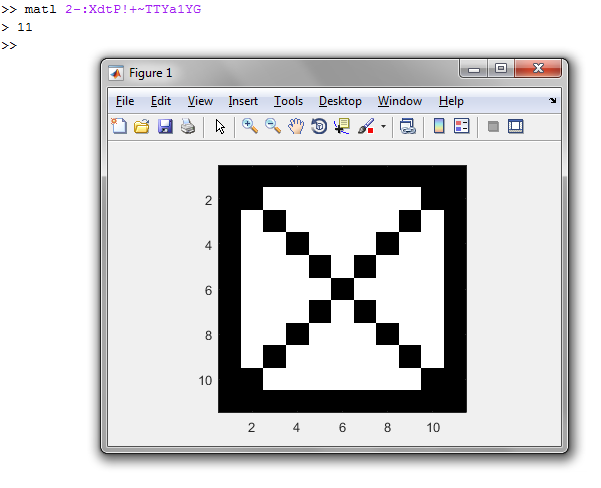
2-:XdtP!+~TTYa1YG
You can try it experimentally in MATL online. You may need to refresh the page if it doesn't work.
Sample run:
ASCII version: 19 bytes
2-:XdtP!+~TTYa~42*c
Vyxal, 8 bytes
×» Ḣ¡»ø∧
Port of 05AB1E. Uses canvas builtin.
How?
×» Ḣ¡»ø∧
×        # Push asterisk
 » Ḣ¡»   # Push compressed integer 2064147 (translates to directions [→,↑,←,↓,↗,↓,↖])
      ø∧ # Canvas builtin with implicit input as the length, 2064147 as the directions, and asterisk as the character
05AB1E, 7 bytes
0•V¾²•Λ
Try it online or verify all test cases.
Explanation:
0        # Push 0
 •V¾²•   # Push compressed integer 2064147
      Λ  # Use the Canvas builtin with the given three options:
         #  Length of the lines: the (implicit) input-integer
         #  Character/string to display: the "0"
         #  Directions: [2,0,6,4,1,4,7]
         # (after which the result is output implicitly immediately)
See this 05AB1E tip of mine (section How to compress large integers?) to understand why •V¾²• is 2064147.
The Canvas Builtin uses three arguments to draw a shape:
- Length of the lines we want to draw: which is the input in this case
- Character/string to draw: the
0(could be any other digit as well) - The direction to draw in: the
[2,0,6,4,1,4,7], where each digit represents a certain direction:
7   0   1
  ↖ ↑ ↗
6 ← X → 2
  ↙ ↓ ↘
5   4   3
So the [2,0,6,4,1,4,7] in this case translates to the directions \$[→,↑,←,↓,↗,↓,↖]\$.
Here a step-by-step explanation of how it draws for example input 7 with these steps:
Step 1: Draw 7 characters ("0000000") in direction 2→:
0000000
Step 2: Draw 7-1 characters ("000000") in direction 0↑:
      0
      0
      0
      0
      0
      0
0000000
Step 3: Draw 7-1 characters ("000000") in direction 6←:
0000000
      0
      0
      0
      0
      0
0000000
Step 4: Draw 7-1 characters ("000000") in direction 4↓:
0000000
0     0
0     0
0     0
0     0
0     0
0000000
Step 5: Draw 7-1 characters ("000000") in direction 1↗:
0000000
0    00
0   0 0
0  0  0
0 0   0
00    0
0000000
Step 6: Draw 7-1 characters ("000000") in direction 4↓:
0000000
0    00
0   0 0
0  0  0
0 0   0
00    0
0000000
Step 7: Draw 7-1 characters ("000000") in direction 7↖:
0000000
00   00
0 0 0 0
0  0  0
0 0 0 0
00   00
0000000
After which the result is output implicitly immediately afterwards.
See this 05AB1E tip of mine for an in-depth explanation of the Canvas builtin.
Kotlin, 123 116 bytes
change if with \n to println
{s:Int->val n=s-1
for(r in 0..n){for(c in 0..n)print(if(n-r==c||r==c||r<1||c<1||r==n||c==n)"#"
else " ")
println()}}
SHELL ( 135 Bytes):
C(){ j=$(($1-1));for i in $(seq 0 $j);do dc<<<2o10i`echo $((1|2**$i|2**($j-$i)|2**$j|(($i==0||$i==$j))*(2**$j-1)))`p;done|tr 01 ' X';}
tests:
 C 1
 X

 C 3
 XXX
 XXX
 XXX

 C 5
 XXXXX
 XX XX
 X X X
 XX XX
 XXXXX

 C 7
 XXXXXXX
 XX   XX
 X X X X
 X  X  X
 X X X X
 XX   XX
 XXXXXXX

 C 9
 XXXXXXXXX
 XX     XX
 X X   X X
 X  X X  X
 X   X   X
 X  X X  X
 X X   X X
 XX     XX
 XXXXXXXXX
Charcoal, 8 bytes (noncompeting; language postdates challenge)
GH+↘↑↙N*
Try it online! Link is to verbose version of code. Explanation: When used as a parameter to the PolygonHollow command, + draws a box, and the arrows then create the diagonals. There are some other shortcut characters but they would need to be redefined to be useful e.g. Y is equivalent to ↖↗↓ but if it was eqivalent to ↗↓↖ then Y+ would suffice.
SmileBASIC, 46 bytes
INPUT I
GBOX I,I,1,1GLINE 1,I,I,1GLINE 1,1,I,I
(No, SB does NOT use 1-indexed graphics...)
Python, 89 bytes
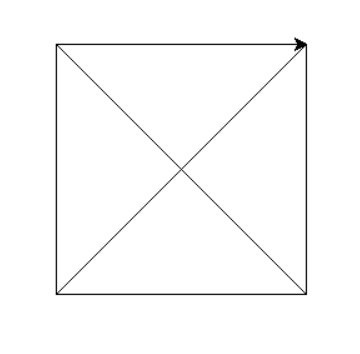
This was a throwback! I used python's turtle module.
from turtle import*
n=input()
for i in[(n,n),(n,0),(0,n),(0,0),(n,0),(0,n),(n,n)]:goto(i)
Here's the result when n=200:
Perl, 83 +1 = 84 bytes
Run with the -n flag.
$\="*
*";print$c="*"x($_+1);for$b(1..$_){@a=($")x$_;@a[$b-1,-$b]=(a,a);print@a}say$c
The literal newline saves 1 byte over \n or $/.
Readable:
$\="*\n*";
print$c="*"x($_+1);
for$b(1..$_){
    @a=($")x$_;
    @a[$b-1,-$b]=(a,a);
    print@a
}
say$c
The code prints the top line and saves it in $c, then prints a bunch of spaces with the appropriate slots replaced with as, then prints the top line again.
The assignment to the $\ variable tells the interpreter to print the contents (an asterisk, a newline, and another asterisk) after every print, but this does NOT occur after a say.
Javascript (289 270 bytes)
function s(a){b=[];for(i=0;i<a;i++)if(b.push([]),0==i||i==a-1)for(j=0;j<a;j++)b[i].push("*");else for(j=0;j<a;j++)0==j||j==a-1?b[i].push("*"):j==i||a-1-j==i?b[i].push("*"):b[i].push(" ");c="";for(i=0;i<b.length;i++){for(j=0;j<b[i].length;j++)c+=b[i][j];c+="\n"}return c}
Ungolfed:
function square(size){
str=[];

for(i=0;i<size;i++){
    str.push([]);
    if(i==0||i==size-1){
        for(j=0;j<size;j++){
            str[i].push("*");
        }
    }else{
        for(j=0;j<size;j++){
            if(j==0||j==size-1){
                str[i].push("*");
            }else if(j==i||size-1-j==i){
                str[i].push("*");
            }else{
                str[i].push(" ");
            }
        }
    }
}

out="";
for(i=0;i<str.length;i++){
    for(j=0;j<str[i].length;j++){
        out+=str[i][j];
    }
    out+="\n";
}
return out;
}
EDIT: Saved 19 bytes thanks to Philipp Flenker.
Java 7, 131 130 128 125 124 122 bytes
String c(int n){String r="";for(int i=n,j;n-->0;r+="\n")for(j=0;j<n;r+=i*j<1|n-i<2|n-j<2|i==j|i==n-++j?"*":" ");return r;}
3 bytes saved thanks to @LeakyNun;
1 byte saved thanks to @OliverGrégoire in my answer for the Draw a hollow square of # with given width challenge;
2 bytes saved thanks to @cliffroot.
Ungolfed & test code:
class M{
  static String c(int n){
    String r = "";
    for(int i = n, j; n-- > 0; r += "\n"){
      for(j = 0; j < n;
            r += i < 1      // Responsible for the first horizontal line
               | j < 1      // Responsible for the first vertical line
               | n-i < 2    // Responsible for the last horizontal line
               | n-j < 2    // Responsible for the last vertical line
               | i == j     // Responsible for the top-left to bottom-right diagonal line
               | i == n-++j // Responsible for the top-right to bottom-left diagonal line (and increasing j)
             ? "*"
             : " ");
    }
    return r;
  }

  public static void main(String[] a){
    System.out.println(c(1));
    System.out.println(c(3));
    System.out.println(c(5));
    System.out.println(c(7));
  }
}
Output:
*

***
***
***

*****
** **
* * *
** **
*****

*******
**   **
* * * *
*  *  *
* * * *
**   **
*******
GNU sed, 117 114 + 1(r flag) = 115 bytes
p;/^0$/Q;/^000$/{p;q}
h;s/./ /3g;s/  $/00/
:f;/ 00 /!{G;h;s/\n.*//p;t;:}
s/^(0 *)0  ?( *)0/\1 0\20 /
tf;s/00/0/p;g
Since sed has no native support for numbers, the input is given in unary based on this consensus. The second half of the square is the first half that was stored in reverse order in hold space.
Run:
sed -rf crossed_square.sed <<< "00000"
Output:
00000
00 00
0 0 0
00 00
00000
S.I.L.O.S, 212 bytes
readIO
a = i
lbla
a - 1
t = a
t + 1
t % i
t * a
b = i
lblb
b - 1
u = b
u + 1
u % i
u * b
u * t
v = a
v - b
u * v
v = a
v + b
v + 1
v % i
u * v
u |
if u c
print #
GOTO d
lblc
print .
lbld
if b b
printLine
if a a
Mathematica, 81 bytes
""<>#&/@Table[If[i^2==j^2||i^2==#^2||j^2==#^2,"*"," "],{i,-#,#},{j,-#,#}]&[(#-1)/2]&
Creates a coordinate system with the origin in the center, and computes where the *s should go. Outputs an array of strings, one per row.
Haskell, 102 100 96 91 87 bytes
c s=unlines.f$f.(#)where f=(<$>[1..s]);x#y|elem y[1,s,x]||elem x[1,s,s-y+1]='*'|1>0=' '
- Saved 2 bytes, thanks to flawr.
- Saved 4 more bytes by using list comprehensions.
- 5 bytes saved combining flawr's improvement with
any - 4 bytes saved by replacing
anywithelem
Ungolfed version:
cross :: Int -> String
cross s = unlines $ map line [1..s]
    where line y = map (pos y) [1..s]
          pos y x | x == y = '*'
                  | x == s - y + 1 = '*'
                  | y `elem` [1, s] = '*'
                  | x `elem` [1, s] = '*'
                  | otherwise = ' '
I'm sure this can still be improved, but this is what I've come up with for now.
Old version:
c s=unlines.f$f.(#)where f=(<$>[1..s]);x#y|any(==y)[1,s,x]||any(==x)[1,s,s-y+1]='*'|1>0=' '
Python, 114 110 96 90 bytes
Totally changed:
lambda n:[bin(sum(2**p for p in[range(n),{0,n-1,r,n-1-r}][0<r<n-1]))[2:]for r in range(n)]
Returns a list of strings, characters using 1 and 0.
-6 bytes thanks to TheBikingViking
Test it at ideone
Previous Python 2 @110
def f(n):g=range(n);n-=1;print'\n'.join(''.join((c in(r,n-r,0,n)or r in(0,n))and'#'or' 'for c in g)for r in g)
Test it on ideone
VBA Excel, 168 bytes
Instruction:
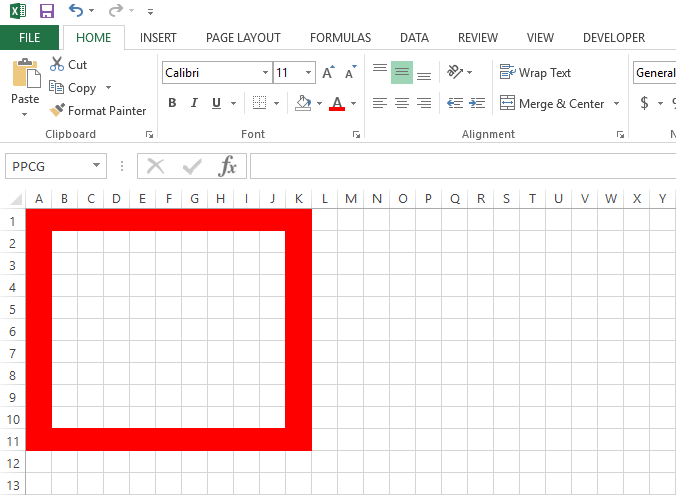
I find Excel with the help of VBA is an effective and a sufficient tool for this challenge. Set the worksheet of Excel like following
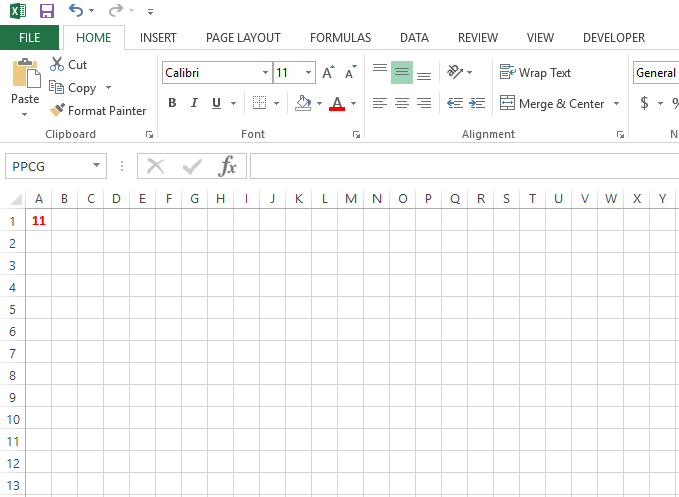
Yes, we use the small, classic square-shaped pixels like the old times by using the cells in a worksheet as the pixels. Ha-ha...
Here I use cell A1 as the input and I change its font color to red. Why red? Because red is three-letter-color so it fits for golfing. Write and run the following code in the Immediate Window:
N=[A1]:Range("A1",Cells(N,N)).Interior.Color=vbRed:Range("B2",Cells(N-1,N-1)).Clear:For i=1To N:Cells(i,i).Interior.Color=vbRed:Cells(i,N+1-i).Interior.Color=vbRed:Next
Ungolfed the code:
Sub A()
    N = [A1]
    Range("A1", Cells(N, N)).Interior.Color = vbRed
    Range("B2", Cells(N - 1, N - 1)).Clear

    For i = 1 To N
        Cells(i, i).Interior.Color = vbRed
        Cells(i, N + 1 - i).Interior.Color = vbRed
    Next
End Sub
Step-by-step Explanation:
N = [A1]: Range("A1", Cells(N, N)).Interior.Color = vbRed
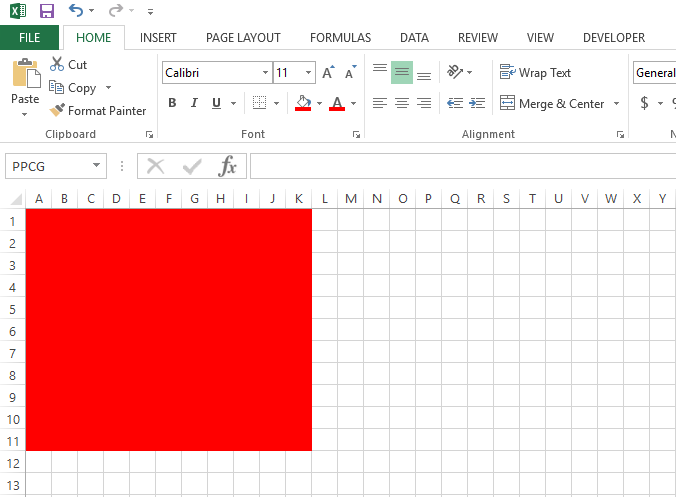
Range("B2", Cells(N - 1, N - 1)).Clear
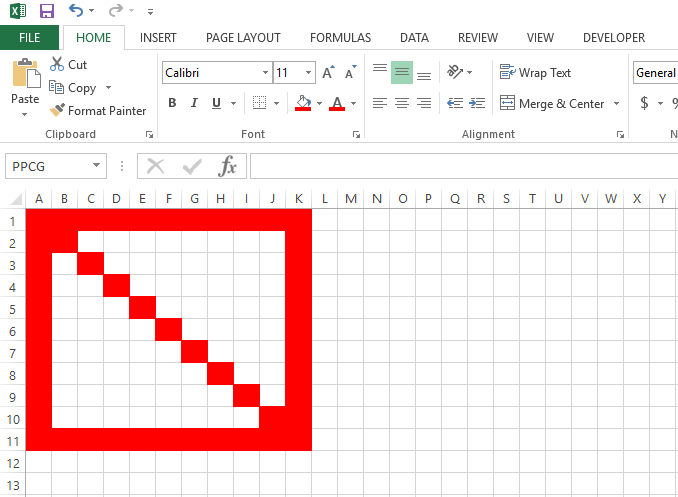
Looping through the diagonal of range cells: Cells(i, i).Interior.Color = vbRed
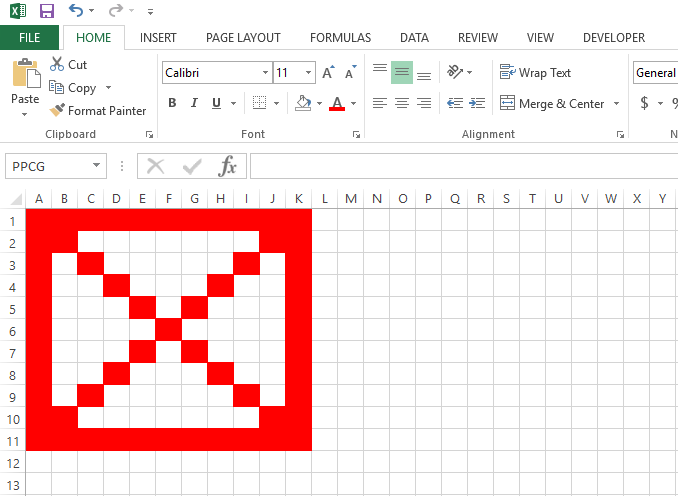
Final step and output: Cells(i, N + 1 - i).Interior.Color = vbRed
Python 2, 65 bytes
i=n=2**input()/2
while i:print bin((n>i>1or~-n)|n|i|n/i)[2:];i/=2
Uses Jonathan Allan's idea of outputting binary numbers like:
11111
11011
10101
11011
11111
The rows are created with bit arithmetic and displayed in binary. Each part it or'ed into the rest. The part are are produced by powers of 2 n (fixed) and i (falling) via
- Left side
1 - Right side
n - Diagonals
iandn/i - Top and bottom by
n-1wheni==1ori==n.
Actually, (1) and (4) are combined by producing 1 when 1<i<n and n-1 otherwise.
Python 2, 83 bytes
i=n=input()
while i:l=['* '[1<i<n]]*n;i-=1;l[0]=l[~0]=l[i]=l[~i]='*';print`l`[2::5]
Modifies a list of the row's characters to put a * into the first, last, i'th, and i'th-to-last place. The first and last row start as all *, and the rest as all spaces. Works for evens too. A lambda expression is probably shorter than modification, but I like this method.
Logo, 155 bytes
Graphical solution, implemented as a function
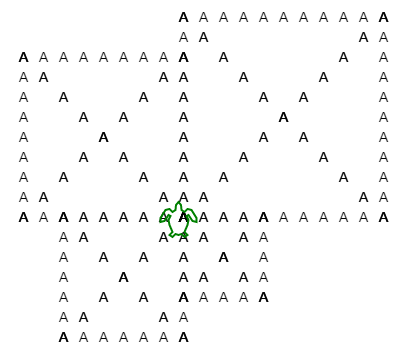
I retooled my answer for Alphabet Triangle and changed the angles around a bit. As before, r draws a line of characters. This time, the b function draws a box by drawing one straight edge and one diagonal, rotating, and repeating four times. This causes the diagonals to be drawn twice (on top of each other), but it was less code than handling it separately. This answer also properly handles even numbers. I had to add special handling for an input of 1 to prevent it from going forward.
I implemented it as a function, b which takes the size as an argument:
pu
to r:n:b:l repeat:n[rt:b label "A lt:b if repcount>1[fd:l]] end
to b:s
repeat 4[rt 90
r:s 90-heading 20 rt 135
r:s 90-heading 20*sqrt 2 rt 45]
end
Try it out on Calormen.com's Logo interpreter.
To call it, append a line and call b in the following format:
b 7
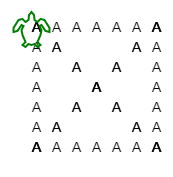
... or try the sampler platter, which draws four samples in sizes 5, 7, 9, and 11, rotating 90 degrees in between:
repeat 4[
  b repcount*2+3
  rt 90
]
PowerShell (133)
filter s($x){1..$x|%{$o="";$r=$_;1..$x|%{if($_-eq1-or$r-eq1-or$_-eq$x-or$r-eq$x-or$r-eq$_-or$r-1-eq$x-$_){$o+="*"}else{$o+="_"}};$o}}
Clunky, but it works well enough.
s(11)
***********
**_______**
*_*_____*_*
*__*___*__*
*___*_*___*
*____*____*
*___*_*___*
*__*___*__*
*_*_____*_*
**_______**
***********
Golfing suggestions definitely welcome, it's been too long since I've PowerShell'd.
C, 140 121 114 bytes
19 bytes thanks to Quentin.
7 bytes saved by switching from a double-nested loop to one loop.
main(a){scanf("%d",&a);for(int i=0;i<a*a;i++,i%a||puts(""))putchar(i/a&&i/a^a-1&&i%a&&-~i%a&&i%-~a&&i%~-a?32:42);}
Golfing suggestions welcome.
C#, 112 101 bytes
Thanks to TheLethalCoder for reminding me that these anonymous lambda statement-nor-expression things are allowed in C#.
n=>{var r="";for(int y=n--,x;y-->0;r+="*\n")for(x=0;x<n;r+=y%n*x<1|y==x|y==n-x++?"*":" ");return r;};
Who said C# isn't a fun golfing language?
Scala, 141 137 bytes
val s=args(0).toInt-1;val t=0 to s;print(t.map{x=>t.map{y=>if(x==0||x==s||y==0||y==s||x==y||x==s-y)"*" else " "}.mkString+"\n"}.mkString)
Run:
$ scala cross.scala 10
Technically I could remove the print stuff and go to something like
def c(n:Int)={val (s,t)=(n-1,0 to n-1);t.map{x=>t.map{y=>if(x==0||x==s||y==0||y==s||x==y||x==s-y)"*" else " "}.mkString+"\n"}.mkString}
This would make it 135 or 121 bytes depending on whether you count the function syntax stuff.
Readable version:
def cross(n: Int) = {
   // Declares both s and t as variables with tuple expansion
   // s is the zero-based size and t is a range from 0 to s
   val (s,t) = (n-1, 0 to n-1)

   // Maps all rows by mapping the columns to a star or a space
   t.map { x =>
      t.map { y =>
        if (x == 0 || x == s || y == 0 || y == s || x == y || x == s-y) "*"
        else " "
      }.mkString+"\n" // Concatenate the stars and spaces and add a newline
   }.mkString         // Concatenate the created strings
 }
Java, 130 bytes
s->{for(int i=0;i<s;i++)for(int j=0;j<s;j++)System.out.print((s-1-i==j||i==j||i==0||j==0||i==s-1||j==s-1)?j==s-1?"*\n":"*":" ");};
Test Program
Consumer<Integer> consumer = s -> {
        for (int i = 0; i < s; i++) {
            for (int j = 0; j < s; j++) {
                System.out.print((s - 1 - i == j || i == j || i == 0 || j == 0 || i == s - 1 || j == s - 1) ? j == s - 1 ? "*\n" : "*" : " ");
            }
        }
    };

    consumer.accept(20);
Matlab, 68 66 64 58 bytes
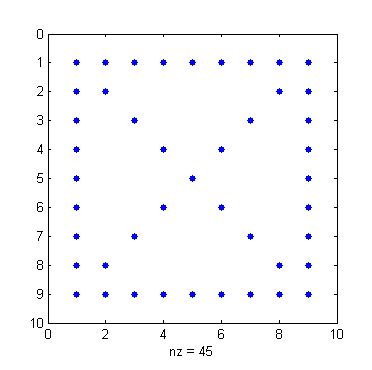
Since graphical output is allowed too:
k=input('');[x,y]=ndgrid(abs(-k:k));spy(~(max(x,y)<k&x-y))
Which outputs e.g.
The ascii only versions would be:
This is using the indexing 0,1,2,3,...
k=input('');[x,y]=ndgrid(abs(-k:k));[(max(x,y)==k|~(x-y))*42,'']
Alternatively with the indexing 1,3,7,...:
n=input('');k=1:n;m=eye(n);m([k,end-k+1])=1;[(m|flip(m'))*42,'']
JavaScript (ES6), 96 bytes
f=
n=>[...Array(n--)].map((_,i,a)=>a.map((_,j)=>i&&j&&n-i&&n-j&&i-j&&n-i-j?' ':'*').join``).join`
`
;
<input type=number min=1 step=2 oninput= o.textContent=f(this.value)><pre id=o>R, 102 bytes
n=scan();for(i in 1:n){for(j in 1:n){z=" ";if(i%in%c(1,n,n-j+1)|j%in%c(1,i,n))z="*";cat(z)};cat("\n")}
Note that it is more efficient to express the condition using %in% than i==1|j==1|...