| Bytes | Lang | Time | Link |
|---|---|---|---|
| 091 | brainfuck | 240803T030525Z | Andrew B |
| 066 | 1. PHP | 240614T234107Z | LucianDe |
| 2744 | Perl 5 | 240614T155755Z | Dom Hast |
| 062 | CJam + AlphaBeta | 140824T235525Z | Dennis |
| 045 | Part 1 Ruby | 140913T035219Z | britisht |
| 082 | Python Symbols | 140822T200126Z | ɐɔıʇǝɥʇu |
| 053 | Total | 140823T144259Z | isaacg |
| nan | Parts 1 and 2 in Ruby 2 | 140822T185519Z | histocra |
| 318 | Total | 140823T190059Z | Digital |
| 654 | Part 2 in Applescript | 140823T011547Z | Digital |
| 074 | Part 1 in BrainFuck | 140822T165055Z | spocot |
| 130 | GolfScript 14 chars + Deadfish x 116 chars = | 140822T182451Z | Peter Ta |
| nan | Well | 140822T163218Z | yasen |
brainfuck, 91 bytes
Part 1:
++++++++[->++++++++<]++[->>+++++++++++++<<]>>[-<+.>]<++++++<++[->>+++++++++++++<<]>>[-<+.>]
1. PHP, 66 bytes
foreach(range(chr(10),chr(122)) as$l){echo ctype_alpha($l)?$l:'';}
Output: ABCDEFGHIJKLMNOPQRSTUVWXYZabcdefghijklmnopqrstuvwxyz
2. PHP, 105 bytes
foreach(range(chr(ord('c')-ord('B')),chr(ord('z')+ord('E')-ord('A'))) as$l){echo !ctype_alpha($l)?$l:'';}
Output: !"#$%&'()*+,-./0123456789:;<=>?@[]^_`{|}~
As Dom Hastings suggested, printing letters without using them at all, can be achieved as following:
PHP, 275 bytes
<?=($_='!'^'`').++$_.++$_.++$_.++$_.++$_.++$_.++$_.++$_.++$_.++$_.++$_.++$_
.++$_.++$_.++$_.++$_.++$_.++$_.++$_.++$_.++$_.++$_.++$_.++$_.++$_
.($_='@'^'!').++$_.++$_.++$_.++$_.++$_.++$_.++$_.++$_.++$_.++$_.++$_
.++$_.++$_.++$_.++$_.++$_.++$_.++$_.++$_.++$_.++$_.++$_.++$_.++$_.++$_;


// ABCDEFGHIJKLMNOPQRSTUVWXYZabcdefghijklmnopqrstuvwxyz
Perl 5, 2744 bytes
Letters, Perl 5, 68 bytes
('#/2%|("(,)2/>'^"````[[[[[[[[[")->($~,"@{['!'^'`'.._,'@'^'!'.._]}")Symbols, Perl 5 + -M5.10.0, 2676 bytes
I'd quite like to make this smaller, but I'm not sure how just yet. I'll keep thinking on this!
Note: This link includes a ; but that's due to a bug in this code input control and not needed for the code to work.
say chr length for qw oAAAAAAAAAAAAAAAAAAAAAAAAAAAAAAAAA
AAAAAAAAAAAAAAAAAAAAAAAAAAAAAAAAAA
AAAAAAAAAAAAAAAAAAAAAAAAAAAAAAAAAAA
AAAAAAAAAAAAAAAAAAAAAAAAAAAAAAAAAAAA
AAAAAAAAAAAAAAAAAAAAAAAAAAAAAAAAAAAAA
AAAAAAAAAAAAAAAAAAAAAAAAAAAAAAAAAAAAAA
AAAAAAAAAAAAAAAAAAAAAAAAAAAAAAAAAAAAAAA
AAAAAAAAAAAAAAAAAAAAAAAAAAAAAAAAAAAAAAAA
AAAAAAAAAAAAAAAAAAAAAAAAAAAAAAAAAAAAAAAAA
AAAAAAAAAAAAAAAAAAAAAAAAAAAAAAAAAAAAAAAAAA
AAAAAAAAAAAAAAAAAAAAAAAAAAAAAAAAAAAAAAAAAAA
AAAAAAAAAAAAAAAAAAAAAAAAAAAAAAAAAAAAAAAAAAAA
AAAAAAAAAAAAAAAAAAAAAAAAAAAAAAAAAAAAAAAAAAAAA
AAAAAAAAAAAAAAAAAAAAAAAAAAAAAAAAAAAAAAAAAAAAAA
AAAAAAAAAAAAAAAAAAAAAAAAAAAAAAAAAAAAAAAAAAAAAAA
AAAAAAAAAAAAAAAAAAAAAAAAAAAAAAAAAAAAAAAAAAAAAAAA
AAAAAAAAAAAAAAAAAAAAAAAAAAAAAAAAAAAAAAAAAAAAAAAAA
AAAAAAAAAAAAAAAAAAAAAAAAAAAAAAAAAAAAAAAAAAAAAAAAAA
AAAAAAAAAAAAAAAAAAAAAAAAAAAAAAAAAAAAAAAAAAAAAAAAAAA
AAAAAAAAAAAAAAAAAAAAAAAAAAAAAAAAAAAAAAAAAAAAAAAAAAAA
AAAAAAAAAAAAAAAAAAAAAAAAAAAAAAAAAAAAAAAAAAAAAAAAAAAAA
AAAAAAAAAAAAAAAAAAAAAAAAAAAAAAAAAAAAAAAAAAAAAAAAAAAAAA
AAAAAAAAAAAAAAAAAAAAAAAAAAAAAAAAAAAAAAAAAAAAAAAAAAAAAAA
AAAAAAAAAAAAAAAAAAAAAAAAAAAAAAAAAAAAAAAAAAAAAAAAAAAAAAAA
AAAAAAAAAAAAAAAAAAAAAAAAAAAAAAAAAAAAAAAAAAAAAAAAAAAAAAAAA
AAAAAAAAAAAAAAAAAAAAAAAAAAAAAAAAAAAAAAAAAAAAAAAAAAAAAAAAAA
AAAAAAAAAAAAAAAAAAAAAAAAAAAAAAAAAAAAAAAAAAAAAAAAAAAAAAAAAAA
AAAAAAAAAAAAAAAAAAAAAAAAAAAAAAAAAAAAAAAAAAAAAAAAAAAAAAAAAAAA
AAAAAAAAAAAAAAAAAAAAAAAAAAAAAAAAAAAAAAAAAAAAAAAAAAAAAAAAAAAAA
AAAAAAAAAAAAAAAAAAAAAAAAAAAAAAAAAAAAAAAAAAAAAAAAAAAAAAAAAAAAAA
AAAAAAAAAAAAAAAAAAAAAAAAAAAAAAAAAAAAAAAAAAAAAAAAAAAAAAAAAAAAAAA
AAAAAAAAAAAAAAAAAAAAAAAAAAAAAAAAAAAAAAAAAAAAAAAAAAAAAAAAAAAAAAAA
AAAAAAAAAAAAAAAAAAAAAAAAAAAAAAAAAAAAAAAAAAAAAAAAAAAAAAAAAAAAAAAAAAAAAAAAAAAAAAAAAAAAAAAAAAA
AAAAAAAAAAAAAAAAAAAAAAAAAAAAAAAAAAAAAAAAAAAAAAAAAAAAAAAAAAAAAAAAAAAAAAAAAAAAAAAAAAAAAAAAAAAA
AAAAAAAAAAAAAAAAAAAAAAAAAAAAAAAAAAAAAAAAAAAAAAAAAAAAAAAAAAAAAAAAAAAAAAAAAAAAAAAAAAAAAAAAAAAAA
AAAAAAAAAAAAAAAAAAAAAAAAAAAAAAAAAAAAAAAAAAAAAAAAAAAAAAAAAAAAAAAAAAAAAAAAAAAAAAAAAAAAAAAAAAAAAA
AAAAAAAAAAAAAAAAAAAAAAAAAAAAAAAAAAAAAAAAAAAAAAAAAAAAAAAAAAAAAAAAAAAAAAAAAAAAAAAAAAAAAAAAAAAAAAA
AAAAAAAAAAAAAAAAAAAAAAAAAAAAAAAAAAAAAAAAAAAAAAAAAAAAAAAAAAAAAAAAAAAAAAAAAAAAAAAAAAAAAAAAAAAAAAAA
AAAAAAAAAAAAAAAAAAAAAAAAAAAAAAAAAAAAAAAAAAAAAAAAAAAAAAAAAAAAAAAAAAAAAAAAAAAAAAAAAAAAAAAAAAAAAAAAAAAAAAAAAAAAAAAAAAAAAAAAAAA
AAAAAAAAAAAAAAAAAAAAAAAAAAAAAAAAAAAAAAAAAAAAAAAAAAAAAAAAAAAAAAAAAAAAAAAAAAAAAAAAAAAAAAAAAAAAAAAAAAAAAAAAAAAAAAAAAAAAAAAAAAAA
AAAAAAAAAAAAAAAAAAAAAAAAAAAAAAAAAAAAAAAAAAAAAAAAAAAAAAAAAAAAAAAAAAAAAAAAAAAAAAAAAAAAAAAAAAAAAAAAAAAAAAAAAAAAAAAAAAAAAAAAAAAAA
AAAAAAAAAAAAAAAAAAAAAAAAAAAAAAAAAAAAAAAAAAAAAAAAAAAAAAAAAAAAAAAAAAAAAAAAAAAAAAAAAAAAAAAAAAAAAAAAAAAAAAAAAAAAAAAAAAAAAAAAAAAAAAoCJam + AlphaBeta, 62 bytes
Letters, CJam, 12 bytes
"[{"{,-26>}/
Output
ABCDEFGHIJKLMNOPQRSTUVWXYZabcdefghijklmnopqrstuvwxyz
How it works
"[{"{     }/   For each of the characters "[" and "{",
     ,         push an array of all ASCII characters before it
      -26>     and discard all but the last 26 characters.
Symbols, AlphaBeta, 50 bytes
ZaaAccctFUaCLOrEbbCLbCLbCLbCLdddACLbCLbCLgDLgDLgDL
The official C++ interpreter has a bug that makes loops impossible and I can't figure out how to use the Lua interpreter. I fixed that bug. You can verify that it works as intended by running the example programs from the EsoLang page.
Output
!"#$%&'()*+,-./0123456789:;<=>?@~}|{]\[^_`
How it works
Z      Switch register 4 to the position register.
aa     Set registers 1 to 2.
A      Copy the value from register 1 to register 2.
ccc    Add 30 to register 1 (result: 31).
tF     Set register 2 to the product of registers 1 and 2 (result: 64).
U      Add 10 to the position register (result: 10, i.e., the position of the next byte).
aCL    Add 1 to register 1 and print the corresponding ASCII character.
O      If register 1 != register 2, go to the position in the position register.
rEb    Set register 1 to the sum of registers 1 and 2 minus 1 (result: 127).
bCL    Subtract 1 from register 1 and print the corresponding ASCII character.
bCL    Subtract 1 from register 1 and print the corresponding ASCII character.
bCL    Subtract 1 from register 1 and print the corresponding ASCII character.
bCL    Subtract 1 from register 1 and print the corresponding ASCII character.
ddd    Subtract 30 from register 1 (result: 93).
A      Copy the value from register 1 to register 2.
CL     Print the ASCII character corresponding to register 1.
bCL    Subtract 1 from register 1 and print the corresponding ASCII character.
bCL    Subtract 1 from register 1 and print the corresponding ASCII character.
gDL    Add 1 to register 2 and print the corresponding ASCII character.
gDL    Add 1 to register 2 and print the corresponding ASCII character.
gDL    Add 1 to register 2 and print the corresponding ASCII character.
Part 1: Ruby, 45 bytes
_=[*?@...?[,*?`...?{]
_[0],_[27]=*$_
$><<_*''
Explanation
- A Range containing a-z (
?@...?[) and a Range containing A-Z (?`...?{) become the elements of the array_using the splat operator (*). - The 0th element (
"@") and 27th element ("`") of the array_are set tonil. - The array
_is joined together usingArray#*and printed to stdout ($>)
Python (Symbols, 87 82)
from string import punctuation
from string import digits
print digits
print punctuation
I just love Python's string module...
Edit:
from string import punctuation as p
from string import digits as d
print d
print p
Output:
0123456789
!"#$%&'()*+,-./:;<=>?@[\]^_`{|}~
FALSE (Letters, 21) DUP (Letters, 20):
FALSE solution:
65[$91\>][$,$32+,1+]#
DUP sollution (1 char shorter)
65[$91<][$,$32+,1+]#
Output (for both):
AaBbCcDdEeFfGgHhIiJjKkLlMmNnOoPpQqRrSsTtUuVvWwXxYyZz
Total: 102
Total: 53 characters
Total in a single language: 230 characters, Pyth
Part 1: Golfscript, 15
91,65>123,97>++
Outputs:
ABCDEFGHIJKLMNOPQRSTUVWXYZabcdefghijklmnopqrstuvwxyz
Explanation:
91,           Make the list, [0 1 .. 90]
65>           Take elements after the 65th, [65 66 .. 90]
123,97>       Same, but [97 98 .. 122]
+             Add the list above to the newline character that is automatically pushed to
              the stack. List + str coerces to string by ascii encoding.
+             Same, for the other list.
Part 2: Pyth, 38
JhCeGLjkmCdbsrCdCPhGsrhCPeGChGsrJhhhhJ
Outputs:
 !"#$%&'()*+,-./0123456789:;<=>?@
[\]^_`
{|}~
Explanation:
G = "abcdefghijklmnopqrstuvwxyz"   Implicit.
k = ""                             Implicit.
d = " "                            Implicit.
JhCeG                              J = 1 + chr(end(G))          # J = 123
L                                  def d(b): return
 jk                                                k.join(
   m                                                      map(lambda d:
    Cd                                                                 chr(d),
    b                                                                  b))
s                                  print(s(                    #print is implicit.
 rCd                               range(chr(d),                 # chr(d) = 32
 CPhG                                    chr(upper(head(G))))    # chr("A") = 65
srhCPeGChG                         print(s(range(1+chr(upper(end(G))),chr(head(G)))
srJhhhhJ                           print(s(range(J, 1+1+1+1+J)))
Bonus solution:
Part 1: Pyth, 192
%*$"%\143"$52(65 66 67 68 69 70 71 72 73 74 75 76 77 78 79 80 81 82 83 84 85 86 87 88 89 90 97 98 99 100 101 102 103 104 105 106 107 108 109 110 111 112 113 114 115 116 117 118 119 120 121 122
Explanation:
$"%\143"$ => "%c". $ switches to and from Python parsing style, and in Python string parsing, \143 is the octal escape sequence for c. This answer is thus equivalent to the following Python-style code:
("%c" * 52) % (65, 66, 67, ...)
Of course, this doesn't work in Python, because printing in Python uses print, but printing in Pyth is implicit, so it works.
Pyth solutions do not use any of the features added since the question was asked.
Parts 1 and 2 in Ruby 2, 56 + 484 = 540
Part 1:
__=->_{(91..96)===_||$><<(''<<_);_>121||__[-~_]}
__[65]
For more on this style of Ruby, check out narfnme.
Part 2 (this bit is Ruby 2.0+ only, works perfectly with ruby-2.1.0 but may give warnings in earlier versions):
class Fixnum
def c
String def a
end
end
def b
String def A
end
end
def x
String def z
end
end
def y
String def Z
end
end
def inspect
case chr
when c
when b
when y
p succ
else
print chr
p succ
end
p
rescue
p
end
end
def x
String def z
end
end
def y
String def Z
end
end
class String
def inspect
p size
p
end
end
p String p
class String
def inspect
p ord
p
end
end
p y
class Fixnum
def inspect
case chr
when x
p succ
else
send chr
print chr
p
end
p
rescue
print chr
p succ
p
end
end
p x
That one was hard. Calling built-in Fixnum methods like chr and succ requires opening up the Fixnum class and redefining inspect, since I can trigger a call to x.inspect with p x. I need inspect to return nil so that p will only print a newline, any string will be framed in double quotes. But as a side effect, it loops. I can terminate the first loop and second loops using a string comparison to see when I've reached a letter range, but since I can't write a string literal I need to get one by calling String() on the symbol returned (in Ruby 2) by the def keyword. Since that's a multiline syntax and I can only do string comparison via case, which can't take multiline expressions, I need to wrap the literal in a method (since I obviously can't do assignment). The last loop is harder to terminate. I need it to stop at ~. Luckily, of the ascii characters in that range, ~ is the only one that can be called on a Fixnum with no arguments without raising an error, so I can use send chr to detect when I'm at the end and stop looping.
Not the best score in this thread, but thus far the only one that uses the same language for both parts. Yay Ruby.
Total 318 bytes
I was really hoping to figure out an answer with both programs in the same language, but so far nothing. Here's this instead:
Part 1: Pure bash, 129 bytes
_0=`$ 2>&1`
_0=${_0##*:}
_1=${_0:5:1}
_5=${_0:1:1}$_1${_0:11:1}
. <($_5<<<_2=\({${_1^}..$_1}\))
_3=${_2[@]:0:26}
$_5<<<$_3${_3,,}
Output:
$ ./letsym.sh
A B C D E F G H I J K L M N O P Q R S T U V W X Y Za b c d e f g h i j k l m n o p q r s t u v w x y z
$
Part 2: GNU dc, 189 bytes
zzzzzzzzzzzzzzzzzzzzzzzzzzzzzzzzzzPzzPzzPzzPzzPzzPzzPzzPzzPzzPzzPzzPzzPzzPzzPzzPzzPzzPzzPzzPzzPzzPzzPzzPzzPzzPzzPzzPzzPzzPzzPzzPzzzzzzzzzzzzzzzzzzzzzzzzzzzzPzzPzzPzzPzzPzzPzzBDPBEdPBFPdkvZP
Output:
$ dc symlet.dc
!"#$%&'()*+,-./0123456789:;<=>?@[\]^_`{|}~$
Part 2 in Applescript, 654
wait... where's the "tips for golfing in Applescript" page?
global a
global b
global c
global s
on f at n
set end of b to a
end
on g at n
f at a
f at a
end
on h at n
g at a
g at a
end
on i at n
h at a
h at a
end
on j at n
repeat with t in system info
f at a
end
end
on m at n
set end of b to a
set c to count of b
set end of s to ASCII character c
end
on n at n
m at a
m at a
m at a
end
on o at n
repeat with t in system info
m at a
end
end
set a to random number
set b to a as list
j at a
j at a
set c to count of b
set s to ASCII character c
set s to s as list
o at a
n at a
n at a
n at a
n at a
n at a
j at a
i at a
g at a
f at a
n at a
m at a
m at a
j at a
i at a
g at a
n at a
m at a
display dialog s as text
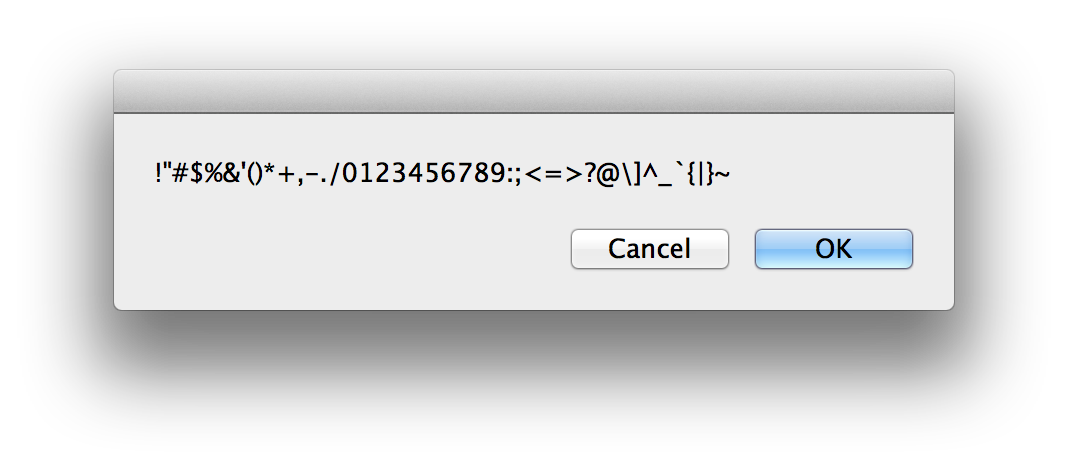
Output:
Part 1 in BrainFuck: 80 74 bytes
>-[+>+<[+<]>]>+.<<+++++[>+++++[>+.<-]<-]>>+++++++.<<+++++[>+++++[>+.<-]<-]
GolfScript (14 chars) + Deadfish x (116 chars) = 130 chars
91,65>{.32+}%+
and
xxcxxcdddKxKxKxKxKxKxKxKxKxKxKxKxKxKxKxKxKxKxKxKxKxKxKxKxKxKxKxKxKxKxKxKDxxxccxxxxxxxxxxKxKxKxKxKxKDxxxcxxcxxKxKxKxK
Well, you know, someone should get it going.
Part 1 in BrainFuck: 174 bytes
+++++++++++++++++++++++++++++++++++++++++++++++++++++++++++++++++
.+.+.+.+.+.+.+.+.+.+.+.+.+.+.+.+.+.+.+.+.+.+.+.+.+.+++++++
.+.+.+.+.+.+.+.+.+.+.+.+.+.+.+.+.+.+.+.+.+.+.+.+.+.