| Bytes | Lang | Time | Link |
|---|---|---|---|
| 028 | Raku Perl 6 rakudo | 241216T152213Z | xrs |
| 001 | Uiua | 241216T080858Z | bb94 |
| nan | 241216T013617Z | nyxbird | |
| nan | 241215T132018Z | noodle p | |
| 004 | C GCC | 230209T063327Z | Peter |
| nan | 170119T125726Z | FlipTack | |
| nan | 170101T141627Z | Anthony | |
| nan | 150415T021447Z | 2012rcam | |
| nan | 150414T183944Z | ASCIIThe | |
| nan | 140217T205040Z | AShelly | |
| nan | 150304T032723Z | Luke | |
| nan | 150304T083648Z | blutoran | |
| nan | 150303T234956Z | Leafthec | |
| nan | 140217T021408Z | Maltysen | |
| nan | 140218T013036Z | Darren S | |
| nan | 140219T202622Z | Christop | |
| 002 | Powershell | 140218T193007Z | Rynant |
| nan | 140217T021039Z | Justin | |
| nan | 140217T022236Z | danmcard | |
| 002 | GolfScript | 140217T175741Z | Ben Reic |
| nan | 140217T144359Z | yedidyak | |
| nan | 140217T033049Z | blabla99 | |
| nan | 140217T184557Z | Anko | |
| nan | 140218T065850Z | Gaurang | |
| 002 | Python | 140217T112438Z | Blender |
| nan | 140217T203957Z | Jonathan | |
| nan | 140217T223414Z | bchetty | |
| 004 | PHP | 140217T151618Z | Vereos |
| nan | 140217T203407Z | Tobia | |
| nan | 140217T212128Z | user1216 | |
| nan | 140217T104544Z | Neil Sla | |
| nan | 140217T210606Z | Bryan | |
| nan | 140217T195829Z | user1663 | |
| nan | 140217T202658Z | ahruss | |
| nan | 140217T162350Z | cormulli | |
| nan | 140217T180151Z | p.s.w.g | |
| nan | 140217T174544Z | user2846 | |
| nan | 140217T112056Z | 200_succ | |
| nan | 140217T054242Z | Beyamor | |
| 004 | Python 2 | 140217T080839Z | OregonTr |
| nan | 140217T071951Z | Pierre-L | |
| nan | 140217T032411Z | unclemea |
Raku (Perl 6) (rakudo), 28 bytes
(2..$_)
.reduce({$^a
*$^b})}
(2..$_)      # from two to sigil
.reduce({$^a # dot reduce placeholder a
*$^b})}      # times placeholder b
Uiua, 1 haiku
F ← (1⇡ # let F be one range
  /×+:) # reduce multiply add flip
≡F⇡13   # rows F range thirteen
Uiua
under negate range
sort deshape reverse transpose
reduce multiply
Formats to /×⍆♭⇌⍉⍜¯⇡.
under negate range takes the range from 1 to n, sort desphape reverse transpose is a no-op on a 1d range, and reduce multiply takes the product.
Uiua
Factorial ← ⧅≠⟜∘
Read as:
Factorial ←        # Factorial gets:
            ⧅≠     # tuples inequality
              ⟜∘   # on identity.
Alternatively, ⧅≠ can be read as "count permutations of length".
C (GCC), 4 haikus
int fac(int number) { // int fac int number
        if (number == 0) { // if number equals zero
                puts("Done."); return 1; // puts done return one
        }

        else return number // else return number
                * fac(number - 1); // times fac number minus one
        puts("Unreachable"); // puts unreachable
}

main(argc, argv) // main arg-c arg-v
        char ** argv; { // char pointer pointer arg-v
        char c = getchar(); // char c is getchar

        printf("%" // print-f ampersand
                "d", fac(c - '0')); // d fac c minus zero
        return +0; // return plus zero
}
Python
Uses a single haiku to do the job!
f = lambda x:   \ #  f is lambda x:
    0**x or x * \ #    zero pow x, or x times
    f(x-1)        #    f(x minus 1)
This defines a recursive lambda which calculates the factorial - 0**x handles the case of 0 as it evaluates to 1.
Python - Two Haikus
val = int(input())        -> val is int(input())
for hi in range(1,n):   -> for hi in range one to n
    val *= hi           -> val is val times hi

# Still a cool haiku    -> Just read it
print(n)                -> print val in parentheses
# Completed haiku       -> Just read it
Mathematica - One Haiku (+1 extra (2 counting title))
factorial[n_]
 := Product @@
  Range[1, n]
fac-tor-i-al en
set de-layed pro-duct ap-ply
range from one to en
From some simple words
Complex functions can arise
Mathematica
Perl - 3 Haikus
This one useds some clever formatting and pronunciations - it also disregards symbols.
print "Enter number: ";
chomp(my $num = <STDIN>);
$result = 1;
for $x (1..$num) {
  $new = $x * $result;
  $result = $new;
}
if (1) { print "$result\n .
Is the factorial of\n";
if ($result) { print "$num"; }
Haiku:
Print: En-ter num-ber
Chomp: my num e-quals STD (stand)-IN
Re-sult e-quals one
For x one to num (or 'one range num')
New e-quals x times re-sult
re-sult e-quals new
If one: print re-sult
Is the fac-to-ri-al of
If re-sult: print num
Let me know if I messed up anywhere.
C
Least beautiful haiku ever.
int main(int argc,
char *argv[]){int in,out;
sscanf(argv

[1],"%d",
&in);out=1;while
(in >

1){out*=
in--;}printf(
"%d",out);}//done

/*
Int main, int argc,
char star argv. Int in out.
Sscanf argv

sub one, percent d,
and in. Out equals one. While
in is greater than

one, out times equals
in minus minus. Printf
percent d out. Done
*/
Shakespeare
The Products of Love:
A haiku tragedy with
mathy undertones.

Romeo, a man.
Juliet, a maiden fair.
Friar John, a monk.

Act I: A Cycle.
Scene I: Pertinent Values.
[Enter Romeo]

[Enter Friar John]
Romeo: Listen to thy
heart. Thou art thyself.

Friar John: Thou art
as forthright as a songbird.
[Exit Friar John]

[Enter Juliet]
Romeo: Thou art as fair
as a violet.

Scene II: Questioning
Themselves. [Exit Juliet]
[Enter Friar John]

Friar John: Art thou
as just as the sum of me
and a nobleman?

Romeo: If so,
let us proceed to scene III.
[Exit Friar John]

[Enter Juliet]
Romeo: Thou art as good
as the product of

thyself and myself.
Juliet: Thou art as fierce
as the sum of an

eagle and thyself.
We must return to scene II.
Scene III: A Lengthy

Title for a Brief
Dénouement; Or, The Last Word.
[Exit Friar John]

[Enter Juliet]
Romeo: Open your heart.
[Exit Romeo]
An (imagined) test case:
Despite its length, this program just takes a single integer as input and provides a single integer as output. So:
6 ↵ 720
7 ↵ 5040
0 ↵ 1    1 ↵ 1
("Six, seven-twenty. / Seven, five thousand forty. / Zero, one. One, one.")
Whitespace
This makes uses of one of the most famous haikus, and a great deal has been written about it.
No idea why nobody has done this before, it doesn't even take any effort!
First of all, before reading the poem, I want you to lean back, relax, and enjoy the tranquility created by the great void surrounding the poem. It emphasizes the pond, surrounded by a vast landscape.
古池や
蛙飛びこむ
水の音
In case you do not speak Japanese, this is pronounced as follows:
fu ru i ke ya
ka wa zu to bi ko mu
mi zu no o to
Naturally, it is counted by morae. The kireji is や (ya), the kigo (seasonal reference) is 蛙 (kawazu, frog, -> spring).
Using the linux interpreter from the official page, you can use it like this:
$ echo 5 | ./wspace .ws
Befunge-93
Three haikus:
0&>:v
-:|:>1>
v#>$\
>:>>v
>$.@v<<
^#v*_
#>>>v
<<:\<>^
<#<#<
Last line is admittedly kind of cheaty.
Try here: http://www.bedroomlan.org/tools/befunge-93-playground
Are we allowed to use filler?
Python 2 haikus:
number = num + 1
a = 13 + 4
b = 14

nuum = len([1])
for i in range(1, number):
    nuum *= i
Forth
: fugu 1              \ colon fugu one                = 5
swap 1 + 1 ?do        \ swap one plus one question do = 7
i * loop ;            \ eye star loop semi            = 5
Fugu is the function and my attempt at kigo: blowfish is a winter reference. I intend ?do to be kireji, the turning point, before the counted loop.
Haskell
This one will be a rhyming haiku!
fact 0=1                     --fact zero is one
fact ton=ton * (fact stun)   --fact ton is ton times fact stun
        where stun=pred ton  --where stun is pred ton
Yeah!
Note: Pred means the previous number. Also in haskell, you can have multiple definitions of a function, and the first one that makes sense is used.
Powershell, 2 Haikus
function facto ($num){    # function facto num
$i = 1; 1..$num|          # i equals one; i to num
foreach { $i =            # for each i equals

$i * $_}; write $i}       # i times this write i
$answer = facto $args[    # answer equals facto args
0]; write $answer         # zero write answer
Java - 2 haikus
protected static
        int factorial(int n) {
    if (n == 0) {
        return n + 1;
    } return factorial(n
            - 1) * n;}
Even when the question isn't code-golf, I often catch myself golfing the answer. In this case, I golfed the number of haikus.
I pronounce it so:
protected static
int factorial int n
if n is zeroreturn n plus one
return factorial n
minus one times n
Test program:
class Factorial {                                    // class Factorial
    public static void main(String[]                 // public static void main string
            command_line_run_args) {                 // command line run args

        int i = 0;                                   // int i is zero
        while (7 != 0)                               // while seven is not zero
            System.out.                              // System dot out dot

                    println(i + "!"                  // print line i plus not
                            + " = " + factorial(     // plus is plus factorial
                            i += 1));}               // i plus equals 1

    protected static
            int factorial(int n) {
        if (n == 0) {
            return n + 1;
        } return factorial(n
                - 1) * n;}}
Note that this program starts outputting 0s fast; that is a result of overflow. You could easily get larger correct numbers by changing each int to long.
Standard pronunciations for System.out.println and public static void main(String[] args) are reflected in the program.
Haskell
fact :: Int -> Int          -- fact is Int to Int
fact x = product (range x)  -- fact x is product range x
range x = [1..x]            -- range x is 1 [pause] x
Haskell education time:
- The
range xfunction creates a list of integers from 1 up to the value ofx. - The
fact xfunction multiplies all the values of the listrange xtogether to compute the result. - The first line says that the
factfunction takes an integer and returns an integer.
GolfScript, 2 Haikus
),{0>},{,,*}*
Read as haiku, enumerating each keystroke:
#close parenthesis
#comma open-brace zero
#greater-than close-brace

#comma open-brace
#comma comma asterisk
#close-brace asterisk
With test case (5 haikus):
[1 2 3]4+          #generate the array [1 2 3 4]
{                  #start creating block
),{0>},{,,*}*      #actual factorial code
}%                 #close block and map across array (so that we should have [1! 2! 3! 4!])
[1 2 6]2.3**12++=  #generate the array [1 2 6 24] and check for equality
Read as haiku:
#open-bracket one
#space two space three close-bracket
#four plus open-brace

#close parenthesis
#comma open-brace zero
#greater-than close-brace

#comma open-brace
#comma comma asterisk
#close-brace asterisk

#close-brace percent-sign
#open-bracket one space two
#space six close-bracket

#two period three
#asterisk asterisk one
#two plus plus equals
In SML:
fun fact 0 = 1
  | fact n = n*fact(n-1)
  ;
read as:
"fun fact 0 is one,
bar that, fact n is n times
fact of n less one"
Smalltalk
(evaluate in a workspace; opens a dialog, asks for a number and prints the result on stdout):
"in" "this" 'poem,' "you" "must"
"pronounce" "characters" "like" "these:"
"return(^)," "and" "times(*);" "please".

"but" 'never' "in" "here"
"tell" "anyone" "about" "those"
"few" "parentheses".

"otherwise" "these" "words"
"are" "stupid" "and" "this" "coded"
"rhyme" "is" "wasted" Time.

"let" "us" "now" "begin"
"by" "defining," "in" Object
"and" compile: "the" "rhyme:"

'fac: "with" arg"ument"
"to" "compare" arg <"against" 2 ">"
"and" ifTrue: [ ^"return"

"["1] "or" ifFalse: "then"
["return"^ arg *"times" "the" "result"
"of" ("my"self ")getting"

"the" fac:"torial"
"of" "the" "number" arg "minus"-
1 "[(yes," "its" "easy")]'.

("Let" "me" "my"self "ask"
"for" "a" "number," "to" "compute"
"the" fac:"torial"

("by" "opening" "a"
"nice" Dialog "which" "sends" "a"
request: "asking" "for"

'the Number to use'
"(which" "is" "(" "treated" ) asNumber)
"then" print "the" "result".
I tried to bring in some reflection ("in this poem") and kigo as well. Also, some western style rhyme elements are included (please->these, time->rhyme); however, being neither native speaker of Japanese, nor of English, forgive any stylistic details ;-)
LiveScript
This one's medieval:
prelude = ^^ do                       # prelude is clone do
  require \prelude-ls                 # require prelude dash ls
{ product } = prelude                 # product is prelude

story = (ah) ->                       # story is ah such:
  ones-misery = (one) ->              # one's misery is one such
    let death = product               # let death be product

      fight = [1 to one]              # fight is one to one
      why = (one) -> death <| fight   # why is one such death take fight
  ones-misery ah                      # one's misery ah

room = console.log                    # room is console log
room <| (story 10)!                   # room take story three bang
[null of { use : this }]              # no of use is this
Prints 3628800, which is 10!. It's a little roundabout: The function story returns a function ones-misery, which always returns the answer. It's artsier that way.
No filler comments or unnecessary strings!
Bonus debugging story:
I burst out laughing
when informed that a bug was
"deathisundefined"
Javascript - Two Haikus
function factor (a) {          // function factor a
  if(!a){ return 1 ||          // if not a return 1 or
    a & 17}                    // a and seventeen

  else if (a + 1){             // else if a plus one
    return a * factor          // return a into factor
    (a + ( - 1) )  }}          // a plus minus one
I am not a native speaker. So, I used a dictionary to count the syllables. Hopefully, it's good enough. Any feedback is welcome :)
Python 2
print(reduce(lambda              # print reduce lambda
    a,b: a * b, range(1,         # a b a times b range one
        1 + input()), 1))        # one plus input, one
Mathematica
f[x_]:=     (* f of x defined *)
 x f[x-1]   (* x times f of x less 1 *)
f[1]=1      (* Mogami River *)
Pedants may read the last line as "f of 1 is 1", but I couldn't resist the shout-out to Basho.
Testing:
Table[f[n],     (* Table f of n *)
 {n, 1, 10, 1}] (* n from 1 to 10 by 1 *)
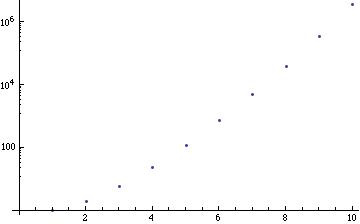
ListLogPlot[%]  (* ListLogPlot output *)
Returning:
(1, 2, 6, 24, 120, 720, 5040, 40320, 362880, 3628800)
Linguistic Distinctiveness Bonus Haiku (inspired by @cormullion)
Rewrite any term
High-level functions abound —
Mathematica
JAVA:
In response to the question and to the Dwaiku (Double-Haiku or whatever you wanna call it) posted by Quincunx in Java, here's the correct Haiku:
public static int factorial(int n) {
   return (n==0) ? (n+1) : (factorial(n-1) * n);
}
PHP, 4 haikus
All-in-rhyme haikus!
function haiku($can) { // function haiku can (5)
    if ($can == 1) // if can is equal to one (7)
        return ++$stun; // return increase stun (5)

    if ($can == 0) { // if can equals ou (5)
        echo "It is one, you know! "; //echo "It is one, you know! " (7)
        return 1+$blow; } //return one plus blow (5)

    if ($can > $fun) { //if can exceeds fun (5)
        return haiku($can-1) //return haiku can less one (7)
            *$can; }} //multiplied by can (5)

if (null == $knee) { // if null equals knee (5)
    $free=0+3; // free equals zero plus three (7)
    echo haiku($free); } // echo haiku free (5)
APL
factorial←{×/⍳⍵}
Factorial is—
the product of naturals
up to omega
Perl
$r = 1; for(1           # r gets one for one
.. pop @ARGV) { $r *=   # to pop arg v r splat gets
$_; } print $r;         # the default print r
Toss this into a file named f.pl
And the output:
$ perl f.pl 3
6$ perl f.pl 1-1
1$ perl f.pl 10
3628800$
Which is read as:
perl f p l three
perl f p l one less one
perl f p l ten
Ruby - One Haiku
ARGV.first.to_i.
 tap do |please| puts 1.upto(
 please ).inject( :*) end
Read (ignoring punctuation, but including one emoticon) like this:
 arg vee first to i
   tap do please puts one up to
 please inject smile end
C
#include <std\
io.h>
#include \
<stdlib.h>

int main(int argc
 , char** argv)
{   // iteratively
    // compute factorial here
long int n = \
0, i \
= 0, r = \
1 /*
product starts at one*/;

if (argc
> 1) { n =
strtol(argv[\
1], NULL, 10)
; if (n
< 0) {
       printf("Arg must\
       be >= 0\n");
       exit(-
    1);}
} i =
n;
while (i) { r
= r * i;
    i
--;
} /* print
the result*/ printf(
"%d factorial\
equals %d\
\n", n
, r);
/*done*/}
Pronounciation:
pound include standard
I/O dot h pound include
standard lib dot h
int main int arg c
comma char star star arg v
open brace comment
iteratively
compute factorial here
long int n equals
zero comma i
equals zero comma r
equals one comment
product starts at one
semicolon if arg c
is greater than one
open brace n is
str-to-l of arg v sub
one comma NULL comma ten
semicolon if
n less than zero begin
printf arg must
be greater than or
equal to zero backslash
n semicolon
exit negative
one semicolon end brace
end brace i equals
n semicolon
while i open brace r
equals r times i
semicolon i
decrement semicolon
close brace comment print
the result printf
percent d factorial
equals percent d
whack n comma n
comma r semicolon
comment done end brace
Haskell
module Haiku where          -- read literally.
fac x = let in do           -- = is read as 'equals'
product [1..x]              -- product one to x
note that the module .. where is added automatically to any Haskell code without it at compilation, so not writing it is practically cheating.
Clojure
(defn fact [n] (if                  # def-fun fact n if
  (zero? n) 1                       # zero question mark n 1
  (* n (fact (dec n)))))            # times n fact dec n
newLISP
The parentheses are not pronounced:
(define (fac n (so))            ; define fac n so
(if (= n 0) 1                   ; if equals n zero 1
(* n (fac (dec n)))))           ; times n fac dec n

(for (n 0 10)                   ; for n zero ten
; let's test from zero to ten
(println (fac n thus)))         ; printline fac n thus
Lisp code consists of
numerous parentheses
and a few functions
F#
let fact n =
    [1..n] |>
    Seq.fold (*) 1
let fact of n be
from one up to n, apply
Seq dot fold star one
Perl
I know it's against the rules to use ready-made functions, but here's what I get.
Imagine your task is to instruct an over-sized rodent:
use Math::BigRat; use
feature 'say'; use warnings; say
new Math::BigRat($_)->bfac
I can only guess what the last word means and how it's pronounced, but I assure you it is one syllable. Apparently he doesn't understand what you want from him, so you have to elaborate (easing on quality standards as you loose patience):
use Math::BaseConvert
':all'; no strict subs; no warnings;
reset and say fact($_)
still to no avail. Then you have to explain it in plain English:
no strict; no warnings;
use Math::Combinatorics;
say factorial($_)
What happened next I don't know, but code is valid:
perl -nE 'use Math::BigRat; use feature "say"; use warnings; say new Math::BigRat($_)->bfac'
42
1405006117752879898543142606244511569936384000000000
and
perl -nE 'use Math::BaseConvert ":all"; no strict subs; no warnings; reset and say fact($_)'
33
8683317618811886495518194401280000000
and
perl -nE 'no strict; no warnings; use Math::Combinatorics; say factorial($_)'
16
20922789888000
Python
lambda n: reduce(
    lambda a, b: a * b,
    range(1, n), n)
The way I read it:
lambda n: reduce
lambda a b: a times b
range 1 to n, n
`
Clojure
(->> *command-line-args*                ; thrush com-mand line args
  seq last read-string range (map inc)  ; seq last read string range map inc
  (reduce *) println)                   ; re-duce times print-lin
Python 2, 4 Haikus
A complete Python 2 program haifac.py. Run as python haifac.py <n>
#run this full program
import operator as\
op; import sys#tem

#please provide an arg
n = sys.argv[1]
def haifac (n):

    if n < 1:
        return 1#to me at once
    else:#do something else

        return op.mul(
            n, haifac(n - 1))
print haifac(int(n))
Pronounciation:
run this full program
import operator as
op import systemplease provide an arg
n equals sys arg v 1
define hai fac nif n less than 1
return 1 to me at once
else do something elsereturn op dot mul
n hai fac n minus 1
print hai fac int n
C# - 3 haikus
I removed the usual C# using, namespace and class definition clutter, which would be a 4th haiku.
public static void
Main(){int num = Convert.
ToInt32

(Console.ReadLine());
 Console.WriteLine(num ==
 0 ? 1 :

Enumerable.
Range(1, num).Aggregate
((i, j) => i * j));}
which I read as
public static void
Main int num equals Convert
To int thirty-two

Console dot Read line
Console Write line num equals
zero? then one, else

Enumerable
Range 1 to num aggregate
i j i times j
Batch
@set /a t=1 &^
for /L %%a in (2, 1, %1) ^
do @set /a t*=%%a
Pronunciation; ignores mathematical expressions as well as these symbols @ / % ^ , ( ):
set a t 1 and
for L a in 2 1 1
do set a t a
Note; this calculates the factorial, it doesn't output it - the variable t contains the factorial.
The following Haiku / code can be appended to the same batch file to output the factorial (the |'s are pronounced as pipe):
@echo %t% ||^
When will you learn, unclemeat ^
Why must you use Batch?