| Bytes | Lang | Time | Link |
|---|---|---|---|
| 007 | MathGolf | 241008T123336Z | Kevin Cr |
| 008 | Japt R | 170519T143559Z | Shaggy |
| 024 | AWK | 231226T043620Z | Bubbler |
| 022 | Gema | 231224T204109Z | manatwor |
| 005 | Vyxal j | 231224T194908Z | pacman25 |
| 008 | MATL | 170511T204530Z | Luis Men |
| 034 | K ngn/k | 220602T114520Z | oeuf |
| 007 | Vyxal | 220602T034928Z | naffetS |
| 015 | APL Dyalog Extended | 200930T092904Z | Razetime |
| 029 | MAWP | 200815T074544Z | Razetime |
| 208 | Poetic | 200930T085119Z | JosiahRy |
| 028 | StupidStackLanguage | 200129T061454Z | Lebster |
| 038 | 1+ | 200815T085310Z | Twilight |
| 009 | J | 200131T053858Z | Jonah |
| 008 | W d n | 191224T091636Z | user8505 |
| 025 | AWK | 200129T001331Z | rootbeer |
| 006 | Husk | 200128T110240Z | user8505 |
| 013 | GolfScript | 200123T041530Z | user8505 |
| nan | TIBASIC | 200119T123607Z | absolute |
| 015 | GolfScript | 200119T112521Z | LCU00 |
| 020 | Burlesque | 200118T124247Z | DeathInc |
| 031 | Python 3 | 200105T025433Z | Mukundan |
| 046 | naz | 200103T205847Z | sporebal |
| 006 | 05AB1E | 191226T104856Z | mekb |
| 011 | Keg | 191224T093644Z | lyxal |
| 058 | Acc!! | 191221T185649Z | DLosc |
| 030 | Dart | 181103T164057Z | Elcan |
| 015 | Emacs | 181103T161055Z | TuxCraft |
| 023 | UGL | 181103T082454Z | Windmill |
| 054 | Pepe | 181103T071325Z | u-ndefin |
| 008 | K oK | 170925T213835Z | mkst |
| 021 | Syms | 170522T162907Z | Calculat |
| 027 | Excel VBA | 170514T135704Z | Taylor R |
| 034 | Python 2 | 170916T103413Z | Rohit-Pa |
| nan | Perl 5 | 170916T053205Z | Xcali |
| 037 | Windows batch | 170513T052408Z | stevefes |
| 011 | Pyth | 170813T023841Z | chromati |
| 006 | 05AB1E | 170531T002430Z | Oliver N |
| 010 | CJam | 170511T155437Z | Erik the |
| 048 | brainfuck | 170511T192818Z | Graviton |
| 020 | Juby | 170511T175318Z | Cyoce |
| 021 | Z80 or 8080 Assembly | 170520T013546Z | Dan Howe |
| 044 | R | 170512T105745Z | djhurio |
| 053 | OCaml | 170520T162653Z | juloo65 |
| 044 | Haskell | 170519T165235Z | Sgt. Dog |
| nan | Ruby | 170519T214555Z | Value In |
| 026 | Cubix | 170519T205022Z | Giuseppe |
| 040 | R | 170512T123206Z | user2390 |
| 018 | braingasm | 170519T165120Z | daniero |
| 026 | PowerShell | 170519T163808Z | colsw |
| 032 | Javascript ES6 | 170519T163457Z | user6953 |
| 055 | Sinclair ZX80/ZX81 without sanity check | 170519T160407Z | Shaun Be |
| 054 | Swift | 170515T180547Z | Leena |
| 020 | QBIC | 170514T134834Z | steenber |
| 009 | Vim | 170515T023920Z | algmyr |
| 033 | Python 3.6 | 170511T145349Z | Jonathan |
| 027 | /// | 170512T214836Z | sporkl |
| 050 | Common Lisp | 170512T210103Z | user6516 |
| 040 | Brainfuck | 170512T205936Z | Zack C. |
| 060 | RPL Reverse Polish Lisp | 170512T191315Z | Golar Ra |
| 025 | Ruby | 170511T194522Z | Alex |
| 008 | 05AB1E | 170511T142845Z | Magic Oc |
| 032 | Python 2 | 170511T164610Z | Rod |
| 030 | C# | 170512T110441Z | TheLetha |
| 026 | Befunge | 170511T204310Z | bwillsh |
| 066 | C# | 170511T182312Z | Ceshion |
| 018 | Retina | 170512T114738Z | Leo |
| 047 | C gcc | 170512T010805Z | Conor O& |
| 040 | Foo | 170512T105725Z | Okx |
| 019 | ><> | 170512T091041Z | Teal pel |
| 072 | VBScript | 170512T063533Z | jdt |
| 023 | Scala | 170512T052947Z | Brian Mc |
| 038 | bash | 170512T003324Z | agc |
| 050 | C# | 170512T002334Z | CHENGLIA |
| 059 | BrainFlak | 170511T200158Z | DJMcMayh |
| 019 | Aceto | 170511T175152Z | L3viatha |
| 008 | V | 170511T174422Z | Leaky Nu |
| 050 | Swift3 | 170511T173740Z | Martyav |
| 005 | Pyke | 170511T171956Z | Blue |
| 036 | Octave | 170511T144156Z | Luis Men |
| 007 | Pyth | 170511T160230Z | Erik the |
| 011 | Carrot | 170511T155718Z | user4180 |
| nan | BrainFlak | 170511T144010Z | Wheat Wi |
| 023 | ><> | 170511T151257Z | Emigna |
| 021 | Retina | 170511T153058Z | Leaky Nu |
| 028 | JavaScript | 170511T143947Z | Shaggy |
| 018 | sed | 170511T143606Z | eush77 |
| 008 | Jelly | 170511T144710Z | Leaky Nu |
| 032 | PHP | 170511T150630Z | Jör |
| 020 | Braingolf | 170511T144527Z | Mayube |
| 003 | Charcoal | 170511T144535Z | Neil |
| 005 | MATL | 170511T142429Z | Luis Men |
| 055 | Java 7 | 170511T144421Z | PunPun10 |
| 034 | Python 3 | 170511T144048Z | Leaky Nu |
MathGolf, 7 bytes
·n\ ]yñ
Explanation:
·        # Quadruplicate the (implicit) input-character
 n       # Push a newline character "\n"
  \      # Swap the top two items
         # Push a space character " "
    ]y   # Wrap all values on the stack into a list, and join them to a string
      ñ  # Palidromize this string
         # (after which the result is output implicitly)
Japt -R, 11 9 8 bytes
³³h4S ò3
³³h4S ò3     :Implicit input of string
³³           :Repeat 9 times
  h4         :Replace the character at 0-based index 4 with
    S        :  Space
      ò3     :Partitions of length 3
             :Implicit output, joined with newlines
AWK, 24 bytes
sub(/./,"&&&\n& &\n&&&")
Attempt This Online! or try some more test cases.
This is one byte shorter than $0=$0$0$0RS$0FS$0RS$0$0$0.
This is basically regex substitution that takes one char and puts it into the box shape. sub without the 3rd argument takes and modifies $0 in-place. Since the substitution always succeeds, the sub call evaluates to true and the modified $0 is printed (the default action).
sub($0,...) doesn't work because some chars don't form a valid regex, such as [.
Gema, 22 characters
*=*$0$0\n$0 $0\n$0$0$0
(Frustratingly inefficient. In Gema the * (and ?) have order numbers, so in ***=*** each * on right side matches the * on left side with same order number. ☹)
Sample run:
bash-5.2$ echo -n 'M' | gema '*=*$0$0\n$0 $0\n$0$0$0'
MMM
M M
MMM
Vyxal j, 40 bitsv2, 5 bytes
4*ð+∞²
Bitstring:
0100101010111010101000100000000000001010
optimal encoding for a 6 byter
MATL, 8 bytes
4Y"0yv3e
Unlike my other MATL answer, this builds the output manually, without using any predefined literal.
Try it at MATL Online!
Explanation
Consider input '^' as an example.
      % Implicitly input one char.
4Y"   % Repeat 4 times. Gives a string.     STACK: '^^^^'
0     % Push 0. Char 0 is shown as space.   STACK: '^^^^', 0
y     % Duplicate from below.               STACK: '^^^^', 0, '^^^^'
v     % Concatenate everything vertically.  STACK: ['^';'^';'^';'^';0'^';'^';'^';'^';'^']
3e    % Reshape into a 3-row char matrix.   STACK: ['^^^';'^ ^';'^^^']
      % Implicitly display.
APL (Dyalog Extended), 15 bytes
(' ',⍞)[⊤7 5 7]
Indexes into a binary matrix.
Requires ⎕IO←0(0-indexing)
MAWP, 29 bytes
|!;!;!;25W;!;84W;!;25W;!;!;;.
-6 bytes from Dion's straightformard solution.
MAWP, 35 bytes
%|7[1A~!~]////25W//84W//25W////~[;]
Manually shifting the stack was more practical than trying to loop through it and make a box.
Poetic, 208 bytes
BOX,OR SQUARE
i was creating a side,i built a box
i looked,it was four-sided
i am somewhat weirdly earnest,however,about n*n squares having a"no-holes-in-a-drawing"shape
i am trying to produce regular squares
StupidStackLanguage, 28 bytes
jfffavvflflqvvvviifblflflfff
Explanation
j # Get the input (x)
fff # first 3
avv # new line
fl # print new line
fl # first x
qvvvviifb # space
lf # second x
lf # new line
lfff # last 3 x's
1+, 40 38 bytes
,";";";(|11+""*")++";^";()**;";^;";";;
Longer than I thought. Ungolfed, but it's a start.
W d n, 8 bytes
º±▀σ\g┘╒
Uncompressed:
4*:' S++3,
Explanation:
4*         Repeat input 4 times
  :' S++   Put space in middle, append input * 4
        3, Chop into 3 equal pieces
Flag: n Join with newlines
W d, 13 11 9 bytes
Here's a version without chopping or similar built-ins.
↨i`♣T'@└µ
Explanation
Uncompressed is:
' a++bab++E
          E % Foreach in the string:
' a++       % (implicit) input, the space, and input
     bab++  % Output the string created by the input,
            % the current item, and the input
            % With a newline
            % The None isn't outputted
Husk, 6 bytes
Husk is way easier to use than Pyth.
C3w½*8
Explanation
    *8 Repeat the input 8 times. "!" -> "!!!!!!!!"
   ½   Halve the input. "!!!!!!!!" -> ["!!!!","!!!!"]
  w    Join with spaces. ["!!!!","!!!!"] -> "!!!! !!!!"
C3     Split into chunks of 3. ["!!!","! !","!!!"]

Husk automatically outputs lists joined with newlines
GolfScript, 13 bytes
4*.' '\++3/n*
Explanation
              # input #
4*            # ["####"]
  .           # ["####","####"]
   ' '        # ["####","####"," "]
      \       # ["####"," ","####"]
       ++     # ["#### ####"]
         3/   # [["###" "# #" "###"]]
           n* # [["###\n# #\n###"]]
TI-BASIC, 14 + 6 = 20 bytes
This submission uses two programs, the main one and a helper program called prgmΘ.
prgmΘ:Disp Ans+" "+Ans:prgmΘ         ;main program

Disp Ans+Ans+Ans                     ;helper program "prgmΘ"
Input is a string stored in Ans.
GolfScript, 15 bytes
...n\." "\.n\..
Explanation
At the beginning of the program, the input is put onto the stack. Each . copies the top of stack. Each n pushes a newline onto the stack. " " pushes a space. \ swaps the top two elements. At the end of the program, the stack is output to the standard output.
Burlesque, 20 bytes
3.*3.*{1 1}' D!)\[un
3.*       # Make a list of 3 instances     {A A A}
3.*       # Again                          {{A A A} {A A A} {A A A}}
{1 1}' D! # Set value at 1,1 to a space    {{A A A} {A   A} {A A A}}
)\[       # Concatenate each internal list {"AAA" "A A" "AAA"}
un        # Join array with newlines
Burlesque, 23 bytes
495b2"1"x/r~'0' r~3coun
Just for a bit of variety
495b2   # Read the number 495 as binary (111101111)
"1"x/r~ # Replace 1s with input char
'0' r~  # Replace 0 with space
3co     # Chunks of 3
un      # Separate by newlines
naz, 46 bytes
1x1f0m9a1a1o0x1r2x1v3o1f1v1o0m4a8m1o1v1o1f1v3o
Strictly speaking, the above program outputs the exact byte stream required to make the square, though the top of the square will be misaligned given that the interpreter linked above always prepends output: to program output.
Explanation (with 0x commands removed)
1x1f0m9a1a1o     # Function 1
                 # Reset the register, add 10 and output (produces a newline)
1r2x1v           # Read the first byte of input and store it in variable 1
3o               # Output the byte 3 times
1f               # Call function 1
1v1o0m4a8m1o1v1o # Output variable 1, output 32 (space), then output variable 1
1f               # Call function 1
1v3o             # Output variable 1 3 times
Keg, 11 bytes
???
? ?
???
It really just replaces the ?s with the input!
Alterate 11 byter
¿3*:&
? ?
&
Acc!!, 58 bytes
N
Count i while 11-i {
Write _+i%4/3*(10-_)+i%6/5*(32-_)
}
How?
Let's lay out the desired output in a line, substituting _ for the newlines, and look at patterns and indices.
###_# #_###
01234567890
We need newlines at indices 3 and 7, a space at index 5, and the input character at all other indices. To put it a different way, for index i, we want newline when i%4 == 3, space when i%6 == 5*, and the input character otherwise.
So, after reading the input character into the accumulator with N, we run a Count loop from 0 up to but not including 11. Iff i%4 is 3, i%4/3 is 1, and we output _+(10-_) i.e. 10 i.e. newline. Iff i%6 is 5, i%6/5 is 1, and we output _+(32-_) i.e. 32 i.e. space. Otherwise, we output _ i.e. the accumulator value i.e. the input character. Fortunately, the two modulo cases are never true at the same time; this would happen at index 11, but we stop at index 10.
* The modulo operation would seem unnecessary here, but (as far as I can tell) it is the shortest way to test i == 5 in Acc!!, which doesn't have a comparison operator.
Emacs, 15 keystrokes
The current buffer must only contain the input character, and the cursor must be at the start of the line.
C-k C-y C-y C-y C-a C-k C-y RET C-y C-b BACKSPACE SPC C-e RET C-y
UGL, 23 Bytes
j"\n"++l*I3l++i" "il*i3
try it online (write the code to stdin. you can also use the link at the top of the answer to try online, that accepts ctrl+v)
Equivalent Python code:
cur_inp = ""
def inp():
    global cur_inp
    cur_inp = input()
    return cur_inp
"\n".join([inp*3]+[cur_inp+" "+cur_inp]+[cur_inp*3])
Using Python's string multiplication.
Pepe, 54 bytes
REEeREEEeeReeerREeeeeEeEeReeereeeEeeeeeReeeREEeeReReee
Explanation:
REEe        # Input as str
REEEee      # Duplicate it
Reee        # Output whole stack
rREeeeeEeEe # Insert linefeed (10) to the stack
Reee        # Output whole stack
reeeEeeeee  # Print space (' ')
Reee        # Output whole stack
REEee       # Go to next position
ReReee      # Pop it (space) and output the whole stack
K (oK), 8 bytes
Solution:
3 3#5$4#
Example:
> 3 3#5$4#"@"
("@@@"
 "@ @"
 "@@@")
Explanation:
Evaluated right-to-left. Build 'AAAA', then 'AAAA ' and then shape into the 3x3 grid required.
3 3#5$4# / the solution
      4# / take 4 of whatever is to the right
    5$   / right pad with whitespace to length 5
3 3#     / shape into 3x3 grid
Bonus:
The solution is a polyglot for q/kdb+:
q)3 3#5$4#"*"
"***"
"* *"
"***"
Excel VBA, 27 Bytes
Anonymous VBE immediate window function that takes input from cell [A1] on the Application.ActiveSheet object and outputs a 'square' to the VBE immediate window.
a=[A1]:?a;a;a:?a" "a:?a;a;a
Perl 5, 23 + 1 (-p) = 24 bytes
The brute force way seems to be the shortest.
$_.="$_$_
$_ $_
$_$_$_"
Windows batch, 37 bytes
@echo %1%1%1
@echo %1 %1
@echo %1%1%1
Simply outputs the first command-line argument in a square form.
Pyth, 11 bytes
jc++K*z4dK3
Explanation:
jc++K*z4dK3    expects a single char as input

j              joins on new line
 c        3    chops array into 3 sized pieces
  +            joins +K*z4d and K
   +           joins K*z4 and d
    K          initialize variable K as *z4
     *z4       duplicate the input 4 times
        d      variable initialized to string " "
         K     calls variable K, in this case *z4
05AB1E, 7 6 bytes
-1 byte thanks to carusocomputing.
ж¹ðJû
Explanation:
         # Implicit input                  # ['R']
 Ð       # Repeat string three times       # ['R', 'R', 'R']
  ¶      # Push newline character          # ['R', 'R', 'R', '\n']
   ¹     # Push first input                # ['R', 'R', 'R', '\n', 'R']
    ð    # Push space                      # ['R', 'R', 'R', '\n', 'R', ' ']
     J   # Join stack                      # ['RRR\nR ']
      û  # Palindromize ("abc" -> "abcba") # ['RRR\nR R\nRRR']
         # Implicit output                 # []
Uses the CP-1252 encoding. Try it online!
CJam, 11 10 bytes
r9*4St3/N*
Explanation:
r9*4St3/N* e# Expects single char (token) as input
r          e# Get input token (C)
 9*        e# Repeat C 9 times
   4St     e# Set the 5th char of C to be a space
      3/   e# Split into parts of length 3
        N* e# Join by newlines
brainfuck, 48 bytes
Great simple challenge.
,...>++++++++++.<.>+[->+>+++<<]>>-.<<<.>>-.<<...
Explanation
,...              : take input, print it 3 times
>++++++++++.      : print ASCII with index 10 (new line)
<.>               : print input.
+[->+>+++<<]>>-.  : add 1 to 10, triple it, subtract one and print it (space)
<<<.>>-.<<...     : print input, newline, and input 3 times
J-uby, 22 20 bytes
-2 bytes thanks to @Jordan
:tr&"...
. .
..."&?.
Explanation
String#tr is Ruby's character-wise replace method. The first & binds :tr to "...\n. .\n...", and the second partially applies '.' to it. Effectively, this is ->s{"...\n. .\n...".tr('.',s)}
Z80 or 8080 Assembly, 21 bytes machine code
Assume a memory mapped I/O device:
              Z80                  8080
3A xx xx    ld  a, (input)      lda  input       ; get input character
11 0A 20    ld  de, 200ah       lxi  d, 200ah   ; space & newline
21 yy yy    ld  hl, output      lxi  h, output  ; get output address
77          ld  (hl), a         mov  m, a       ; output character * 3
77          ld  (hl), a         mov  m, a
77          ld  (hl), a         mov  m, a
73          ld  (hl), e         mov  m, e       ; output newline
77          ld  (hl), a         mov  m, a       ; output character
72          ld  (hl), d         mov  m, d       ; output space
77          ld  (hl), a         mov  m, a       ; output character
73          ld  (hl), e         mov  m, e       ; output newline
77          ld  (hl), a         mov  m, a       ; output character * 3
77          ld  (hl), a         mov  m, a
77          ld  (hl), a         mov  m, a
76          halt                hlt             ; or C9 ret
No interpreter needed!
Hexdump:
0000: 3A 00 FF 11 0A 20 21 01 FF 77 77 77 73 77 72 77
0010: 73 77 77 77 76
where the input address is at FF00h and the output address is mapped at FF01h. The actual addresses will depend on the actual hardware. Of course this assumes the I/O is memory mapped. If it is I/O mapped, it would take several extra bytes because Z80 & 8080 I/O instructions are two bytes each. This also assumes the output device interprets 0Ah as a newline and doesn't require a CR (0Dh) which would add an extra 4 bytes to the program.
R, 44 bytes
cat(y<-rep(scan(,''),4),' ',y,sep='',fill=3)
Test and output:
> cat(y<-rep(scan(,''),4),' ',y,sep='',fill=3)
1: #
2:
Read 1 item
###
# #
###
>
OCaml, 53 bytes
let f c=String.map(function '#'->c|c->c)"###
# #
###"
It's pretty bad. OCaml does not even have a replace function
Bash, 26 bytes
echo "$1$1$1
$1 $1
$1$1$1"
5 bytes less boring
Haskell, 45 44 bytes
-1 byte thanks to Laikoni
Naive approach
f s=putStrLn$s:s:s:'\n':s:' ':s:'\n':s:s:[s]
For some reason
f s=putStr$s:s:s:'\n':s:' ':s:'\n':s:s:[s]
won't output the last line on repl.it, but if it's still valid it shaves off 2 bits for a total of 42
And
f s=print$s:s:s:'\n':s:' ':s:'\n':s:s:[s]
will print the answer as "sss\ns s\nsss" instead of properly linebreaking. If that's valid it shaves off 3 bits for a total of 41
There is a solution with replace that's 42 bits long ... but that's without counting the bytes needed to import the necessary module. For reference:
import Data.String.Utils
f s=putStrLn$replace "." s "...\n. .\n..."
Cubix, 26 bytes
./v.o;@?/i:::Ns:Ss:Nu/:::s
This is the first piece of Cubix code I've ever written...I was originally going to try to answer the Try to make a cube challenge, but I figured I'd answer the original (easier) question first. Cubix is pretty cool!
Try it online! and also Watch the interpeter!
R, 43 40 bytes
cat(gsub("y",scan(,""),"yyy\ny y\nyyy"))
Saved 3 bytes thanks to Giuseppe.
Explanation: create a box using the character "y" and then substitute the input character.
braingasm, 18 bytes
,...10..32..10....
Yeah... read a byte, print it three times, then print a newline (10), then the byte again, then a space (32), that byte again, another newline and that byte three more times...
PowerShell, 26 Bytes
param($c)$c*3;"$c $c";$c*3
takes a char/length 1 string - then prints it 3 times, it twice with a separating space, and it 3 times again.
Javascript (ES6), 32 bytes
i=>`###
# #
###`.replace(/#/g,i)
Sinclair ZX80/ZX81 (without sanity check), ~55 Bytes (listing)
 1 INPUT A$
 2 PRINT A$;A$;A$
 3 PRINT A$;" ";A$
 4 PRINT A$;A$;A$
With sanity check (ZX80 with 8K ROM or ZX81)
 1 INPUT A$
 2 IF NOT LEN A$ OR LEN A$>1 THEN GOTO 1
 3 PRINT A$;A$;A$
 4 PRINT A$;" ";A$
 5 PRINT A$;A$;A$
Line two of the latter version makes sure that there is a single character entered. So in the first example, it is possible to enter nothing and simply press NEW LINE.

Swift, 54 bytes
var s=readLine()!,a=s+s+s+"\n";print(a+s+" "+s+"\n"+a)
QBIC, 23 20 bytes
Brute-forcing this is shorter than fancy string-flips...
?;+A+A?A+@ `+A?A+A+A
Original answer:
A=;+A+A+@┘`+A?A+@ `+_fA
Explanation:
A=;     ; gets a cmd line parameter and assigns it to A$
        This overrides that value by
  +A+A    appending itself two times
  +@┘`    Then a literal newline
  +A      And another copy of the input char
?       PRINT
  A       The combined A$ ("###\n#")
  +@ `    a space
  +_fA    and then the flipped version of A$
Vim, 9 keystrokes
Assuming the input char is present in a buffer, vim makes this straightforward
x3pY2plr<space>
There is probably some magic vim commands of use here (there always seem to be some) so improvement suggestions are welcome. Only one keystroke behind V!
///, 27 bytes
/\\\#//\#\#\#
\#\ \#
\#\#\#
Since there is no other way to take input in ///, it is hard-coded.
/\\\#/INPUT HERE/\#\#\#
\#\ \#
\#\#\#
Version that takes input in Itflabtijtslwi (28 bytes):
GG\\\#GG\#\#\#
\#\ \#
\#\#\#
Common Lisp, SBCL, 50 bytes
(format t"~@?
~a ~:*~a
~@*~@?""~3@{~a~:*~}"(read))
Explanation
format              ;printing function
~@?                 ;execute format string given as argument
~a ~:*~a            ;print current argument (will be result of (read))
                    ;then print space, go back one argument (to again use
                    ;result of (read) and print it
~@*~@?              ;go back to first argument, then execute format string
                    ;given as this argument
"~3@{~a~:*~}"       ;loop three times printing argument number 2
                    ;~:* makes it keep going back to argument number 2
(read)              ;take input
Ideas for improvement are welcomed.
Brainfuck, 40 bytes
+++++[->++<<++++++>],...>.<.<++.>.>.<...
Try it online! Requires an implementation that can access left of the starting position.
Also see: Graviton's brainfuck answer which takes a different approach (but is longer).
Explanation:
Brainfuck can do a lot of cool tricks with its limited instruction set. Unfortunately, this answer doesn't use any of them, because it's cheaper (in terms of bytes) to just hardcode everything.
+++++[->++<<++++++>]                         Sets the cells to |5*6|>0<|5*2|
,                   Takes input character into the middle cell | 30|>#<| 10|
...                                Print the top of the square | 30|>#<| 10| ###
>.                                   Print a newline character | 30| # |>10|    \n
<.                               Print another input character | 30|>#<| 10| #
<++.                  Add 30+2 for a space character and print |>32| # | 10|  _
>.                   And just print the 5 remaining characters | 32|>#<| 10|   #
>.                                                             | 32| # |>10|    \n
<...                                                           | 32|>#<| 10| ###
# = input character, _ = space (ASCII 32), \n = newline (ASCII 10)
Results in this beautiful box (for input '+'):
+++
+ +
+++
RPL (Reverse Polish Lisp), 60 characters
→STR 1 4 START DUP NEXT " " + SWAP + 4 ROLLD + + SWAP 2 PICK
(Note that "→" is a single character on the HP48 and compatible calculators)
Would visually represent what you want by having three items on the stack:
3.: "###"
2.: "# #"
1.: "###"
If you insist to return it as one string, one has to add the newline characters as well and combine the strings, left as exercise to the next tester.
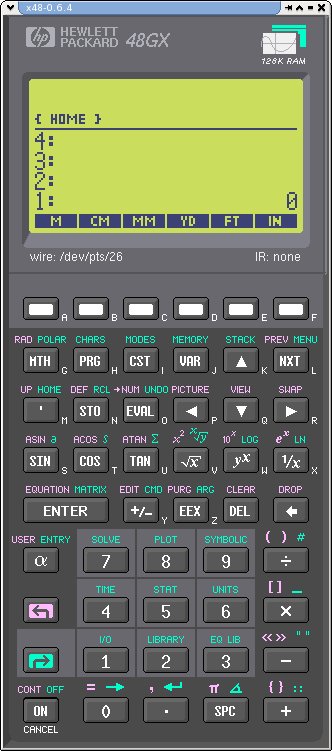
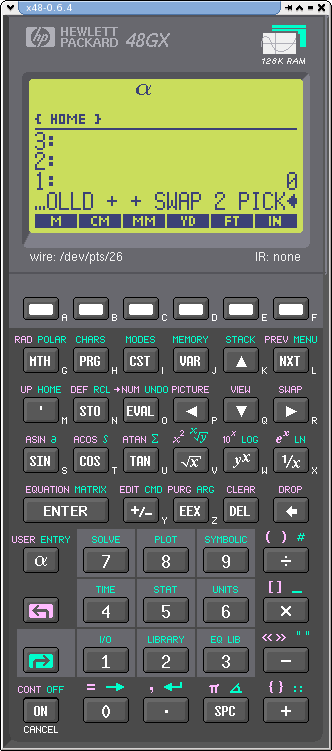
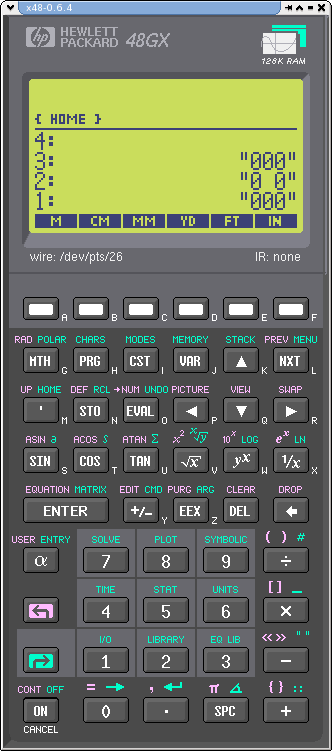
Explanation:
→STR: Make the last object in the stack into a string. (So the input can be anything, e.g. a number.)14: Push the number1and4to the stack.START [...] NEXT: Like a for loop but without access to the counter variable. Takes two numbers from the stack (here, we just have pushed1and4) and executes the code[...]the corresponding times (here, four times).DUP: Duplicate the last entry in the stack." ": Push the string(i.e. the string with one whitespace) to the stack.+: Take two objects from the stack and return them added together, for strings: Concatenated.4: Push the number4to the stack.ROLLD: Takes the last element (here:4that we just have pushed) from the stack and rolls the next element as far down the stack as the number we just took from the stack specifies.SWAP: Swaps the two last stack elements.2: Push2to the stack.PICK: Takes an element (here: The2we just pushed to the stack), interprets it as a number n, and copies the nth element from the stack.
05AB1E, 8 bytes
4×ð«û3ô»
INPUT    # ['R']                 | Implicit Input: 'R'
---------#-----------------------+-------------------------------
4×       # ['RRRR']              | Repeat string 4 times.
  ð      # ['RRRR',' ']          | Push space onto top of stack.
   «     # ['RRRR ']             | Concatenate last 2 items.
    û    # ['RRRR RRRR']         | Palindromize.
     3ô  # [['RRR','R R','RRR']] | Split into 3 pieces.
       » # ['RRR\nR R\nRRR']     | Join with newlines
---------#-----------------------+-------------------------------
OUTPUT   # RRR                   | Implicitly print the top
         # R R                   | of the stack on exit.
         # RRR                   |
Original idea using 30 as a binary number (unfinished, someone else try this in another lang):
05AB1E, 12 bytes
30bûTIð«‡3ô»
Python 2, 32 bytes
lambda s:s+s.join(s+'\n \n'+s)+s
Try it online!
For s='a' : the middle s+'\n \n'+s generates a\n \na and s.join turns it in aa\na a\naa (bold as are the ones that .join adds), because .join accepts a string as an iterable, then it is surrounded with the two missing characters
C#, 30 bytes
s=>s+s+s+$"\n{s} {s}\n"+s+s+s;
Compiles to a Func<string, string>.
Using Replace for 32 bytes.
c=>@"###
# #
###".Replace('#',c);
Compiles to a Func<char, string>.
Befunge, 26 bytes
~:::25*\:84*\:25*\::>:#,_@
Explanation
~::          Take input and put bottom row in stack (: is duplicate)
:25*\:84*\   Create second row (25* is 10 or newline, 84* is 32 or space)
:25*\::      Create top row
>:#,_@       Print out stack until the stack is empty

the \ after the numbers is to switch the stack around since you need the input on
top of the stack to duplicate it
C#, 74 71 66 bytes
m=>{System.Console.WriteLine("{0}{0}{0}\n{0} {0}\n{0}{0}{0}",m);};
golfed 5 bytes thanks to an anon
Retina, 18 bytes
:`$
$_$_
*2=`.
Half of this code looks like trailing empty lines, I like that :)
Explanation
There are three stages in this program, each of them prints a line of the output, in sequence.
:`$
$_$_
Add two more copies of the input at the end and print the resulting string.
*2=`.
There's a single space in the second line. This stage replaces the second character of the string with a space, prints the result, and then reverts the string to what it was before (thanks to the *)
The two final empty lines are a replacement stage with no effect. This is only needed because a final stage with no printing modifier implicitly prints the resulting string.
C (gcc), 49 47 bytes
Saved 2 bytes thanks to 2501!
j;f(i){for(j=12;j;)putchar(--j%4?j-6?i:32:10);}
Try it online! has a trailing newline
Foo, 40 bytes
&<character as ascii value>&3(-1<$c>)$c13<$c$c32$c$c13>&3(-1<$c>)
As Foo cannot take input, you should replace <character as ascii value> with the ASCII value of the character.
VBScript, 72 bytes
n=chr(10):msgbox replace("###"&n&"# #"&n&"###","#",wscript.arguments(0))
VBScript sucks ;-)
Scala, 23 bytes
a=>a*3+s"\n$a $a\n"+a*3
Accepts and returns a String. The s before a string literal allows you to use $-prefixed variables in it, or even ${expressions}. * repeats a String, like in Python.
bash, 43 38 bytes
read -sN1 x
echo "$x$x$x
$x $x
$x$x$x"
C#,50 bytes
a=>Console.Write(a+a+a+"\n"+a+" "+a+"\n"+a+a+a);
Test Case:
var f = new Action<string>(
a=>Console.Write(a+a+a+"\n"+a+" "+a+"\n"+a+a+a);
);
f("#");
Brain-Flak, 61, 59 bytes
(((((((({})))<([][][]())>)<(([][][]()){})>)<([]()()())>)))
This is 58 bytes of code +1 byte for the -c flag which enables ASCII input and output.
Explanation:
(((
   (
    (
     (

      #Duplicate the input 3 times
      ((({})))

#Push 10 (newline)
<([][][]())>

     #Push the input again
     )

#Push 32 (space)
<(([][][]()){})>

    #Push the input again
    )

#Push 10 (newline)
<([]()()())>)

#Push input 3 times
)))
Aceto, 19 bytes
nppk
pKLp
pppn
,kpp
Read a single character (,), then activate sticky mode (k). Print it three times, a newline and then the character again (pppnp).
Deactivate sticky mode (K), then load the empty string from quick storage (L), print it (p), activate sticky mode again (k), and print the rest (pnppp).
Swift3, 50 bytes
[1,2,3].map{$0==2 ? print(c+" "+c) : print(c+c+c)}
This uses the ternary operator to print different strings, depending on the row.
Octave, 36 bytes
x=repmat(input(0),3);x(5)=32;disp(x)
Explanation
This creates a 3x3 char matrix with the input char repeated, and sets its 5th entry in column-major order (i.e. its center) to 32 (ASCII for space).
Pyth, 7 bytes
jc3.[9d
Explanation:
jc3.[9d Expects quoted input.
  3     3
     9  9
      d ' '
        Q (eval'd input) as implicit argument
   .[   Pad B on both sides with C until its length is a multiple of A
 c      Split B to chunks of length A, last chunk may be shorter
j       Join A on newlines
Brain-Flak, 76 70 + 1 = 71 bytes
Requires the -c flag
(((((((({})))<((([])[]{}<>)<>)>)<(<>({})({}){}()()<>)>)<([]()()())>)))
JavaScript, 28 bytes
c=>c+c+c+`
${c} ${c}
`+c+c+c
Try it
f=
c=>c+c+c+`
${c} ${c}
`+c+c+c
o.innerText=f(i.value="#")
i.oninput=_=>o.innerText=f(i.value)<input id=i maxlength=1><pre id=o>Braingolf, 34 20 bytes
...#
<.># <.>#
<..&@
Little disappointed that this isn't easily golfed. At least it's shorter than JavaScript
Explanation:
For input #
| [35]
... | [35,35,35,35]
#<newline> | [35,35,35,35,10]
<.> | [35,35,35,35,10,35]
#<space> | [35,35,35,35,10,35,32]
<.> | [35,35,35,35,10,35,32,35]
#<newline> | [35,35,35,35,10,35,32,35,10]
<.. | [35,35,35,10,35,32,35,10,35,35,35]
&@ | Print entire stack
35 = # ASCII value
10 = <newline> ASCII value
32 = <space> ASCII value
Output:
###
# #
###
Charcoal, 5 3 bytes
B³S
Try it online! Edit: Saved 40% thanks to @carusocomputing. Explanation:
B   Draw a box
³   3×3 (second dimension is implicit if omitted)
S   Using the input character
MATL, 5 bytes
3Y6*c
Explanation
3Y6   % Push predefined literal: [true true true; true false true; true true true]
*     % Implicitly input a character. Multiply element-wise by its code point
c     % Convert to char. Implicitly display. Char 0 is displayed as space
Java 7, 56 55 bytes
-1 Thanks to Leaky Nun for pointing out the space I missed
String a(char s){return"...\n. .\n...".replace('.',s);}
Simply replaces the periods with the given character, for input #:
...       ###
. .  =>   # #
...       ###