| Bytes | Lang | Time | Link |
|---|---|---|---|
| 059 | APLNARS | 250822T065517Z | Rosario |
| 082 | TIBASIC TI84 Plus CE Python | 250821T151411Z | madeforl |
| 097 | AWK | 250821T133041Z | xrs |
| 006 | Thunno 2 ct | 230818T102535Z | The Thon |
| 052 | x8616 machine code | 220118T192350Z | 640KB |
| 025 | APL Dyalog Unicode | 220118T095218Z | Jayant C |
| 072 | Julia | 210507T122843Z | MarcMush |
| 013 | Husk | 210507T080922Z | Razetime |
| 009 | Vyxal | 210507T044702Z | Razetime |
| 011 | Jelly | 210506T185423Z | hyperneu |
| 063 | Perl 5 MListUtil=sum | 201223T202959Z | Xcali |
| 068 | Scala | 201223T185017Z | user |
| 033 | APL Dyalog Unicode | 201223T181617Z | Kamila S |
| 080 | Python3 | 161129T144833Z | george |
| 110 | C | 161205T171518Z | Karl Nap |
| 440 | Perl 6 | 161129T150020Z | Ven |
| 125 | BASH | 161201T043225Z | Ipor Sir |
| 169 | C89 | 161129T211355Z | cat |
| 115 | R | 161129T104508Z | Rudier |
| 071 | Haskell | 161129T173533Z | Angs |
| 081 | Julia | 161130T003035Z | Alex A. |
| 045 | Jellyfish | 161129T205947Z | Martin E |
| 084 | PowerShell v2+ | 161129T204446Z | AdmBorkB |
| 033 | Wonder | 161129T143624Z | Mama Fun |
| 096 | PHP | 161129T190557Z | Xanderha |
| 110 | Python 2 | 161129T151213Z | Lulhum |
| 070 | JavaScript ES6 | 161129T175017Z | ETHprodu |
| 072 | JavaScript ES6 | 161129T165237Z | Arnauld |
| 018 | Pyth | 161129T142504Z | Jakube |
| 012 | 05AB1E | 161129T094507Z | Adnan |
| 013 | Jelly | 161129T115722Z | Jonathan |
| 141 | Pyke | 161129T105000Z | Blue |
| 078 | JavaScript ES6 | 161129T104036Z | edc65 |
| 118 | C# | 161129T102736Z | adrianmp |
| 021 | MATL | 161129T093955Z | Luis Men |
| 020 | Actually | 161129T093917Z | Sherlock |
| 022 | Brachylog | 161129T095326Z | Fatalize |
APL(NARS), 59 chars
r←f w
r←1
→3×⍳∼{∧/0=⍵∣⍨(×/k),+/k←⍎¨⍕⍵}r⋄→0×⍳0≥w-←1
r+←1⋄→2
//+/6 4 41 8 = 59. 1-indexed. Input integer w>0 output the number in sequence position w.
test:
  f 1
1
  f 0
1
  f 10
12
  f 50
11313
TI-BASIC (TI-84 Plus CE Python), 82 bytes
Input N
While N
I+1→I
I→D
DelVar L₁For(E,1,1+log(I
remainder(D,10→L₁(E
int(.1D→D
End
If min(L₁
N-not(remainder(I,sum(L₁)) or remainder(I,prod(L₁→N
End
I
one indexed
AWK, 97 bytes
{for(;z<$1&&++i;y=j=0||x&&i/x!~/\./&&i/y!~/\./&&++z)for(x=1;j++<split(i,a,X);y+=a[j])x*=a[j]}$0=i
Thunno 2 ct, 6 bytes
ƘçSpḊp
Explanation
ƘçSpḊp  # Implicit input, n
Ƙ       # nth positive integer, k, where:
 ç      #  Parallelly apply:
  S     #   Sum of digits of k
   p    #   Product of digits of k
    Ḋ   #  Is k divisible by them
     p  #  Both return true?
        # Implicit output
x86-16 machine code, 52 bytes
00000000: 33db 4351 8bc3 bf0a 0033 f6b1 0133 d2f7  3.CQ.....3...3..
00000010: f703 f291 f7e2 9142 e314 85c0 75ef 8bc3  .......B....u...
00000020: 33d2 f7f6 8bc3 85d2 7504 f7f1 85d2 5975  3.......u.....Yu
00000030: d1e2 cfc3                                ....
Listing:
33 DB       XOR  BX, BX         ; X = 0
        NUM_LOOP:
43          INC  BX             ; increment X
51          PUSH CX             ; save loop counter (N)
8B C3       MOV  AX, BX         ; AX = current X
        START_N:
BF 000A     MOV  DI, 10         ; DI = decimal divisor of 10
33 F6       XOR  SI, SI         ; SI = sum of digits
B1 01       MOV  CL, 1          ; CX = product of digits
        SPLIT_DIGITS:
33 D2       XOR  DX, DX         ; clear high word of dividend
F7 F7       DIV  DI             ; AX = quotient, DX = remainder
03 F2       ADD  SI, DX         ; SI = SI + digit
91          XCHG AX, CX         ; AX = running product, CX = quotient
F7 E2       MUL  DX             ; AX = AX * digit
91          XCHG AX, CX         ; CX = running product, AX = quotient
42          INC  DX             ; ZF = NZ (hacky)
E3 14       JCXZ END_N          ; if digit is a 0, end with Falsey
85 C0       TEST AX, AX         ; is quotient 0?
75 EF       JNZ  SPLIT_DIGITS   ; loop until it is
8B C3       MOV  AX, BX         ; AX = current X
33 D2       XOR  DX, DX         ; clear high word of dividend
F7 F6       DIV  SI             ; divide X by sum
8B C3       MOV  AX, BX         ; AX = current X
85 D2       TEST DX, DX         ; if sum remainder is 0 then Truthy (ZF = ZR)
75 04       JNZ  END_N          ; if not, end with Falsey (ZF = NZ)
F7 F1       DIV  CX             ; divide X by product
85 D2       TEST DX, DX         ; if product remainder is 0 then Truthy (ZF = ZR)
        END_N:
59          POP  CX             ; restore loop counter
75 D1       JNZ  NUM_LOOP       ; if falsey, keep looping and don't decrement counter
E2 CF       LOOP NUM_LOOP       ; otherwise decrement counter and loop
C3          RET                 ; return to caller
Callable function. Input N in CX, Output Nth positive integer in BX.
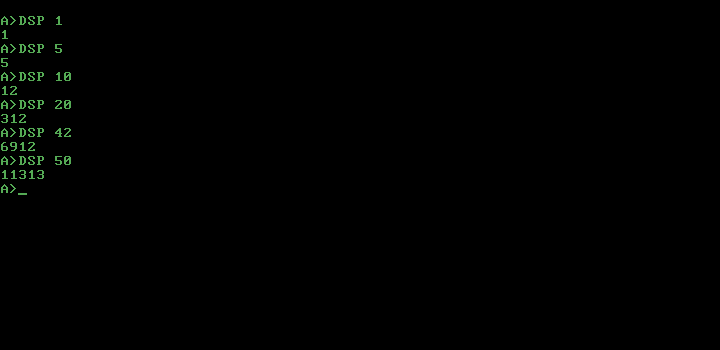
N of 50 is about 4 seconds on an IBM PC 5150:
APL (Dyalog Unicode), 2527 bytes
This even better answer curtesy of Adam
1+⍣{0=⍺|⍨(+/∧×/)⍎¨⍕⍺}⍣⎕⊢0
This is essentially the same just hcf is taken of the sum and product saving 2 bytes
1+⍣{0=∨/⍺|⍨(+/,×/)⍎¨⍕⍺}⍣⎕⊢0
⎕ ⍝ takes user input

{...}⍣n ⍵ ⍝ repeats the function n times

1∘+⍣{0=∨/⍺|⍨(+/,×/)⍎¨⍕⍺} ⍝ given a number repeatetly adds 1(1∘+) untill the condition is satisfied

{⍵|⍨(+/,×/)⍎¨⍕⍵} ⍝ converts numbers to a list of numbers and then take there sum and product and then take there reminder after dividing with the given number

∨/ ⍝ takes HCF of the list escecially checking if both the numbers are not zero

0= ⍝returs true if the hcf is zero
Julia, 72 bytes
n->(i=c=1;while c<n d=digits(i+=1);c+=i%sum(d)<all(d.>0)>i%prod(d)end;i)
improvement over Alex A's answer (explanation there)
Jelly, 11 bytes
DS,PƊḍ¹Ạµ#Ṫ
0-indexed
          Ṫ  get the last element after
        µ#   counting the first (input) elements where
       Ạ     all (both) are true:
     ḍ¹      the element is divisible by
 S,P         the sum, and the products of
D            the digits
Perl 5 -MList::Util=sum,product -p, 63 bytes
($\%sum(@a=++$\=~/./g)+$\=~/0/||$\%product@a)&&redo for 1..$_}{
1-indexed
Scala, 80 68 bytes
Stream from 1 filter{n=>val x=n+""map(_-48.0);n%x.sum+n%x.product<1}
0-indexed. Streams are not only infinite collections but also functions taking an Int and giving the element at that index.
Stream from 1             //Infinite stream starting at 1
  filter { n =>           //Filter each n according to this predicate:
    val x =               //List of digits
      n + ""              //Convert to string
        map(_ - 48.0);    //Turn each character into its corresponding number (as a double, so n%0 works later)
    n % x.sum +           //n modulo the sum of its digits
      n%x.product         //plus n modulo the product of its digits
      < 1                 //Make sure that's less than 1, i.e. both are 0
  }
APL (Dyalog Unicode), 33 bytes
I followed an idea of @ngn when it comes to wrapping the function in some sort of a ⍣-based operation.
{1+⍣{0=+/((1∘⊥,×/)⍎¨⍕⍺)|⍺ ⍺}⍣⍵⊢0}
Explanation:
{1+⍣{0=+/((1∘⊥,×/)⍎¨⍕⍺)|⍺ ⍺}⍣⍵⊢0}
{1+⍣                        ⍣⍵⊢0}  ⍝ Execute the inner dfn until it returns one ⍵ times
                                   ⍝ and yield the last number it processed.
    {0=+/((1∘⊥,×/)⍎¨⍕⍺)|⍺ ⍺}       ⍝ 1 if ⍺ is divisible by sum and product of its digits.
                  ⍎¨⍕⍺             ⍝ digits of ⍺
              ,                    ⍝ a vector of...
               ×/                  ⍝ product of digits
           1∘⊥                     ⍝ sum of digits
                       |⍺ ⍺        ⍝ each modulo ⍺
     0=+/                          ⍝ both divisible?
Python3, 134 80 Bytes
New version thanks to Flp.Tkc
t=input();h=k=0;p=int
def g(x,q=0,w=1):
    for i in x:X=p(x);I=p(i);q+=I;w*=I
    return w!=0and X%q+X%w<1
while h<p(t):k+=1;h+=g(str(k))
New code, I remembered a golfing way to do the factorial
f,t=lambda x:0**x or x*f(x-1),0
for i in str(f(int(input()))):t+=int(i)
print(t)
The code itself isn't very golf-like, more like brute force golf
def g(x):
    q=0;w=1;X=int(x)
    for i in x:I=int(i);q+=I;w*=I
    return (w!=0+ X%q==0and X%w==0)
t=input();h=k=0
while h<int(t):
    k+=1
    if g(str(k))is True:h+=1
g(x) is a function that returns True if x fits the criteria.
C, 110 bytes
p;s;i;j;f(n){j=0;while(n){i=++j;p=1;s=0;do p*=i%10,s+=i%10;while((i/=10)>0);if(p>0&&j%p+j%s==0)--n;}return j;}
Ungolfed and usage:
p;s;i;j;
f(n){
 j=0;
 while(n){
  i=++j;
  p=1;
  s=0;
  do
   p*=i%10,   //product
   s+=i%10;   //sum
  while((i/=10)>0);
  //check if product is not zero since floating point exception
  if(p>0 && j%p + j%s == 0)--n;
 }
 return j;
}

int main(){
 int n;
 scanf("%d",&n);
 printf("\n%d\n", f(n));
}
Perl 6, 44 bytes (0-indexed)
{grep({$_%%(.comb.sum&[*] .comb)},1..*)[$_]}
Explanation:
{                                          }  # A function, with an argument n (`$_`)
 grep(                           ,1..*)       # Filter the infinite list
      {$_                       }             # Check that the function's argument
         %%(                   )              # is divisible by
                     &                        # both:
            .comb.sum                         # - the sum of the digits
                      [*] .comb               # - the product of the digits
                                       [$_]   # Get the n-th value
Infinite lists ftw!
BASH, 125 bytes
while ((n<$1));do
((i++))
p(){ fold -1<<<$i|paste -sd$1|bc;}
z=`p \*`
((z))&&[ $[i%`p +`]$[i%z] -eq 0 ]&&((n++))
done
echo $i
C89, 381 226 195 170 169 bytes
1-indexed (same exact answers as in the challenge).
Assumes 4-byte (32 bit) int (most modern architectures).
I genuinely believe this can't go any shorter.
x,c,*b,m,t,i,a;g(n){for(b=malloc(0);c<n;b[c-1]=x++,t=1){char s[9];for(i=m=0;i<sprintf(s,"%d",x);m+=a,t*=a)a=s[i++]-48;b=m*t?x%m+x%t?b:realloc(b,4*++c):b;}return b[c-1];}
Function int g (int) leaks memory and accesses uninitialised memory once per call but doesn't segfault and returns the right number.
Full program that takes input in unary (./prog $(seq 1 10) for 10) with ungolfed (kinda):
x, c, * b, m, t, i, a;

g(n) {
 for (b = malloc(0); c < n; b[c - 1] = x++, t = 1) {
  char s[9];
  i = m = 0;
  for (; i < sprintf(s, "%d", x); m += a, t *= a) a = s[i++] - 48;
  b = m * t ? x % m + x % t ? b : realloc(b, 4 * ++c) : b;
 }
 return b[c - 1];
}

main (j) {
  printf("%d\n", g(--j));
}
Old answer:
C99, 381 bytes
#include <stdio.h>
#include <inttypes.h>
#include <string.h>
#include <stdlib.h>
#define U uint64_t
#define S size_t
S f(S n){U x=0;S c=1,l;U*b=malloc(sizeof(U));while(c<=n){char s[21];snprintf(s,20,"%"PRIu64,x);U m=0,t=1;l=strnlen(s,21);for(S i=0;i<l;i++){U a=(U)s[i]-48;m+=a,t*=a;}if(m*t?(!(x%m))&&(!(x%t)):0){b=realloc(b,sizeof(U)*++c);b[c-1]=x;}++x;}U o=b[n];free(b);return o;}
This can probably be golfed more.
Full program:
#include <stdio.h>
#include <limits.h>
#include <stdint.h>
#include <inttypes.h>
#include <stdbool.h>
#include <string.h>
#include <stdlib.h>

bool qualifies (const uint64_t);
size_t       f (const size_t);


int main(const int argc, const char* const * const argv) {
  (void) argc;
  size_t arg = strtoull(argv[1], NULL, 10);
  uint64_t a = f(arg);
  printf("a: %" PRIu64 "\n", a);
  return 0;
}

bool qualifies (const uint64_t num) {
  char s[21];
  snprintf(s, 20, "%" PRIu64 "", num);

  uint64_t sum  = 0,
           mult = 1;
  size_t    len = strnlen(s, 400);

  for (size_t i = 0; i < len; i++) {
    uint64_t a = (uint64_t) s[i] - 48;
    sum += a, mult *= a;
  }

  //printf("sum: %" PRIu64 "\nmult: %" PRIu64 "\n", sum, mult);
  return sum * mult ? (! (num % sum)) && (! (num % mult)) : false;
}

size_t f (const size_t n) {
  uint64_t x = 0;
  size_t s_len = 1;
  uint64_t* nums = malloc(sizeof (uint64_t) * s_len);

  while (s_len <= n) {
    if (qualifies(x)) {
      ++s_len;
      //printf("len: %zu\n", s_len);
      nums = realloc(nums, sizeof (uint64_t) * s_len);
      nums[s_len - 1] = x;
    }
    ++x;
  }

  uint64_t o = nums[n];
  free(nums);
  return o;
}
R, 132 115 bytes
New version thanks to @Billywob nice comments !
n=scan();b=i=0;while(i<n){b=b+1;d=strtoi(el(strsplit(c(b,""),"")));if(na.omit(c(!b%%sum(d)&!b%%prod(d),0)))i=i+1};b
Ungolfed :
n=scan()
b=i=0

while(i<n)
    b=b+1;
    d=strtoi(el(strsplit(c(b,""),""))) #Splitting the number into its digits

    if(na.omit(c(!b%%sum(d)&!b%%prod(d),0)))
        i=i+1
b
Since R behave strangley with NAs, I had to add the whole ifelse(is.na(...)) part!
Or use na.omit(...)
Haskell, 94 85 72 71 bytes
([n|n<-[0..],(==)=<<map(gcd n)$[product,sum]<*>[read.pure<$>show n]]!!)
1-indexed.
Thanks to @Zgarb for saving 13 bytes!
Thanks to @nimi for saving a byte!
Julia, 81 bytes
n->(i=c=1;while c<n d=digits(i+=1);all(d.>0)&&i%sum(d)==i%prod(d)<1&&(c+=1)end;i)
This is an anonymous function that accepts an integer and returns an integer. To call it, give it a name. The approach is the obvious one: check every number until we've encountered n terms of the sequence. The all check is necessary to ensure we don't get a DivisionError from % when the product of the digits is 0.
Ungolfed:
function f(n)
    i = c = 1
    while c < n
        d = digits(i += 1)
        all(d .> 0) && i % sum(d) == i % prod(d) < 1 && (c += 1)
    end
    return i
end
Try it online! (includes all test cases)
Jellyfish, 45 bytes
p
\Ai
\&
>(&]&|0
  <*&d
 &~bN
  10
 ( )/+
 /*
Explanation
This is by far the most elaborate (and also the longest) program I've written in Jellyfish so far. I have no idea whether I'll be able to break this down in an understandable manner, but I guess I'll have to try.
Jellyfish provides a fairly general iteration operator, \, which helps a lot with "finding the Nth something". One of its semantics is "iterate a function on a value until a separate test function gives something truthy" (in fact, the test function receives both the current and the last element, but we'll only make it look at the current element). We can use this to implement a "next valid number" function. Another overload of \ is "iterate a function on a starting value N times". We can use our previous function and iterate it on 0 N times, where N is the input. All of that is set up fairly concisely with this part of the code:
p
\Ai
\&
>     0
(The reasons why 0, the actual input to the resulting function, is over there are a bit complicated and I won't go into them here.)
The issue with all of this is, that we won't be passing the current value to the test function manually. The \ operator will do this for us. So we now have construct a single unary function (via compositions, hooks, forks and currying) which takes a number and tells us whether it's a valid number (i.e. one which is divided by its digit sum and digit product). This is fairly non-trivial when you can't refer to the argument. Ever. It's this beauty:
 (&]&|
  <*&d
 &~bN
  10
 ( )/+
 /*
The ( is a unary hook, which means that it calls the function below (f) on its input (the current value x), and then passes both of them to the test function to the right (g), that is it computes g(f(x), x).
In our case, f(x) is another composite function which obtains a pair with the digit product and digit sum of x. That means g will be a function that has all three values to check if x is valid.
We'll start by looking at how f computes the digit sum and digit product. This is f:
 &~b
  10
 ( )/*
 /+
& is also composition (but the other way round). ~ is currying so 10~b gives function that computes the decimal digits of a number, and since we're passing that to & from the right, that's the first thing that will happen to the input x. The remainder uses this list of digits to compute their sum and product.
To compute a sum, we can fold addition over it, which is /+. Likewise, to compute the product we fold multiplication over it with /*. To combine both of these results into a pair, we use a pair of hooks, ( and ). The structure of this is:
()g
f
(Where f and g are product and sum, respectively.) Let's try to figure out why this gives us a pair of f(x) and g(x). Note that the right hook ) only has one argument. In this case, the other argument is implied to be ; which wraps its arguments in a pair. Furthermore, hooks can also be used as binary functions (which will be the case here) in which case they simply apply the inner function only to one argument. So really ) on a single function g gives a function that computes [x, g(y)]. Using this in a left hook, together with f, we obtain [f(x), g(y)]. This, in turn is used in a unary context, which mean that it's actually called with x == y and so we end up with [f(x), g(x)] as required. Phew.
That leaves only one thing, which was our earlier test function g. Recall that it will be called as g([p, s], x) where x is still the current input value, p is its digit product and s is its digit sum. This is g:
  &]&|
  <*&d
    N
To test divisibility, we'll obviously use modulo, which is | in Jellyfish. Somewhat unusually, it take its right-hand operand modulo its left-hand operand, which means that the arguments to g are already in the right order (arithmetic functions like this automatically thread over lists, so this will compute the two separate moduli for free). Our number is divisible by both the product and sum, if the result is a pair of zeros. To check whether that's the case, we treat the pair as a list of base-2 digits (d). The result of this is zero, only when both elements of the pair are zero, so we can negate the result of this (N) to obtain a truthy value for whether both values divide the input. Note that |, d and N are simply all composed together with a pair of &s.
Unfortunately, that's not the full story. What if the digit product is zero? Division and modulo by zero both return zero in Jellyfish. While this may seem like a somewhat odd convention, it actually turns out to be somewhat useful (because we don't need to check for zero before doing the modulo). However it also means we can get a false positive, if the digit sum does divide the input, but the digit product is zero (e.g. input 10).
We can fix this by multiplying our divisibility result by the digit product (so if the digit product is zero it will turn our truthy value into a zero as well). It turns out to be simpler to multiply the divisibility result with the pair of product and sum, and extract the result from the product afterwards.
To multiply the result with the pair, we kinda need to get back at an earlier value (the pair). This is done with a fork (]). Forks are kinda like hooks on steroids. If you give them two functions f and g, they represent a binary function which computes f(a, g(a, b)). In our case, a is the product/sum pair, b is the current input value, g is our divisibility test, and f is the multiplication. So all of this computes [p, s] * ([p, s] % x == [0, 0]).
All that's left now is to extract the first value of this, which is the final value of the test function used in the iterator. This is as simple as composing (&) the fork with the head function <, which returns the first value of a list.
PowerShell v2+, 84 bytes
param($n)for(;$n){$n-=!(++$a%(($b=[char[]]"$a")-join'+'|iex)+$a%($b-join'*'|iex))}$a
Iterative solution. Takes input $n and enters a for loop so long as $n is not zero. Each iteration, we subtract from $n the result of a Boolean statement, broken out below:
!(++$a%(($b=[char[]]"$a")-join'+'|iex)+$a%($b-join'*'|iex))
!(                                                        ) # Encapsulate in a NOT
  ++$a%                                                     # Increment $a and take mod ...
        ($b=[char[]]"$a")                                   # Turn $a into char-array, store in $b
                         -join'+'                           # Join the char-array together with +
                                 |iex                       # and eval it
                                      $a%($b-join'*'|iex)   # Similar for *
                                     +                      # Addition
Thus, only if $a%(sum) and $a%(product) are both equal to zero will the addition also be zero, and thus the Boolean-not will be True and therefore $n is decremented.
Once we exit the loop (i.e., we hit the nth term), we simply place $a on the pipeline, and output is implicit.
Examples
Note: This tosses a bunch of "Attempted divide by zero" errors to STDERR, which is ignored by default. I've explicitly added a 2>$null to the example below to cleanup the output. It's also pretty slow once it gets to about 30 or so, and 50 takes about 45 seconds on my machine.
PS C:\Tools\Scripts\golfing> 1,5,10,20,30,42,50|%{"$_ --> "+(.\numbers-divisible-by-sum-and-product.ps1 $_ 2>$null)}
1 --> 1
5 --> 5
10 --> 12
20 --> 312
30 --> 1344
42 --> 6912
50 --> 11313
Wonder, 33 bytes
@:^#0(!>@!(| %#0sum#0)%#0prod#0)N
Zero-indexed. Usage:
(@:^#0(!>@!(| %#0sum#0)%#0prod#0)N)9
Explanation
More readable:
@
  iget #0
    (fltr@
      not (or % #0 sum #0) % #0 prod #0
    ) N
Basically gets an infinite list of numbers divisible by its digital sum and product by filtering an infinite list of whole numbers through a predicate. Then the nth item is simply picked out of the list.
PHP, 96 bytes
Takes n as a command line argument.
Golfed
for(;$i<$argv[1];)!($p=array_product($d=str_split(++$j)))|$j%array_sum($d)||$j%$p?:$i++;echo $j;
Ungolfed
for (; $i < $argv[1];)                             // Loop until we've found the nth number as pass by command line
    !($p = array_product($d = str_split(++$j))) || // Split our current number into its digits and assign that to a variable, then assign the product of that array to another variable.
                                                   // As well, we're checking if the product equals 0, to prevent an error from trying to mod by 0 later. The condition short circuits before it happens.
    $j % array_sum($d) ||                          // Check if the sum of the array is a divisor
    $j % $p                                        // Check if the product is a divisor
    ?: $i++;                                       // Increment the number of found instances only if all conditions are met.
echo $j;                                           // Output to screen.
Python 2, 122 110 Bytes
def a(m,i=1,k=1):n=map(int,`i`);p=reduce(lambda x,y:x*y,n);k+=p and 1>i%sum(n)+i%p;return(k>m)*i or a(m,i+1,k)
1 indexed, you need to use a Python interpreter with a quite high recursion limit.
JavaScript (ES6), 70 bytes
k=(b,n=1,f=c=>n%eval([...n+''].join(c))!=0)=>f`+`|f`*`||--b?k(b,n+1):n
This turned out quite a bit like @Arnauld's answer, but recursion is apparently 2 bytes shorter. Works in Chrome, though it's very slow on inputs greater than 30 or so (50 takes 6 seconds).
JavaScript (ES6), 72 bytes
k=>eval("for(n=0;(E=o=>n%eval([...n+''].join(o))!=0)`+`|E`*`||--k;)++n")
Demo
It tends to be slow for higher values, so I'm limiting it to 20 here.
let f =

k=>eval("for(n=0;(E=o=>n%eval([...n+''].join(o))!=0)`+`|E`*`||--k;)++n")

console.log(f(1));  // 1
console.log(f(5));  // 5
console.log(f(10)); // 12
console.log(f(20)); // 312
Pyth, 18 bytes
e.f!.xs%LZsM*FBsM`
Try it online: Demonstration
Explanation:
e.f!.xs%LZsM*FBsM`ZZQ1   implicit variables at the end
e                        print the last number of the
 .f                 Q1   first Q (input) numbers Z >= 1, which satisfy:
                 `Z         convert Z to a string, e.g. "124"
               sM           convert each digits back to a number, e.g. [1, 2, 4]
            *FB             bifurcate with product, e.g. [[1, 2, 4], 8]
          sM                take the sum of each, e.g. [7, 8]
       %LZ                  compute the modulo of Z with each number, e.g. [5, 4]
      s                     and add both numbers, e.g. 9
    .x             Z        if an exception occurs (mod 0), use number Z instead
   !                        test, if this number is zero
05AB1E, 13 12 bytes
Thanks to Emigna for saving a byte!
µNNSONSP‚ÖP½
Explanation:
µ          ½   # Get the nth number for which the following holds:
  NSO          #   The sum of digits of the current number
     NSP       #   And the products of digits of the current number
 N      ‚ÖP    #   Divides the current number
               # If the nth number has been reached, quit and implicitly print N
Uses the CP-1252 encoding. Try it online!
Jelly, 13 bytes
DµP;SðḍȦ
1Ç#Ṫ
1-based.
TryItOnline!
How?
DµP;SðḍȦ - Link 1, test a number
D        - convert to a decimal list
 µ       - monadic chain separation
   ;     - concatenate the
  P      -     product, and the
    S    -     sum
     ð   - dyadic chain separation
      ḍ  - divides n?
       Ȧ - all (i.e. both)

1Ç#Ṫ - Main link, get nth entry, 1-based: n
1 #  - find the first n matches starting at 1 of
 Ç   - the last link (1) as a monad
   Ṫ - tail (the ultimate result)
Pyke, 14 bytes (non-competitive) (1-indexed)
~1IY'sB]im%X)@
My god what a lot of new features.
~1             -   infinite list of natural numbers
  IY'sB]im%X)  -  filter(^, V) - remove if any truthiness
   Y           -      digits(i)
    'sB]       -     [sum(^), product(^)]
        im%    -    map(^, %i)
           X   -   splat(^)
             @ - ^[input]
Of which are non-competitive
- a bugfix in
Iwhere it would only check if the first item on the stack was truthy digits- return a list of digits in the number@used to get the nth item of an infinite list
Of which were being used for the first time:
- all of the above
- infinite lists
Remove the last 2 bytes to get all of these numbers.
JavaScript (ES6), 78
n=>eval("for(i=0;n;!p|i%s|i%p||n--)[...++i+''].map(d=>(s-=d,p*=d),s=0,p=1);i")
Less golfed
n=>{
  for(i=0; n; !p|i%s|i%p || n--)
    s=0,
    p=1,
    [...++i+''].map(d=>(s-=d, p*=d));
  return i
}
C#, 118 bytes
n=>{int x=0,c=0;for(;;){int s=0,p=1,i=++x;while(i>0){s+=i%10;p*=i%10;i/=10;}if((c+=p>0&&x%s+x%p<1?1:0)==n)return x;}};
Full program with ungolfed function and test cases:
using System;

public class Program
{
    public static void Main()
    {
        // x - output number
        // c - counter
        // s - sum
        // p - product
        // i - iterator
        Func<int,int>f= n=>
        {
            int x=0, c=0;
            for ( ; ; )
            {
                int s=0, p=1, i=++x;
                while (i > 0)
                {
                    s += i%10;
                    p *= i%10;
                    i /= 10;
                }
                if ( (c += p> 0&& x%s+x%p<1 ? 1 : 0) == n)
                    return x;
            }
        };

        // tests:
        Console.WriteLine(f(1));  //1
        Console.WriteLine(f(5));  //5
        Console.WriteLine(f(10)); //12
        Console.WriteLine(f(20)); //312
        Console.WriteLine(f(42)); //6912
        Console.WriteLine(f(50)); //11313
    }
}
MATL, 21 bytes
`@tFYAtswph\~?@]NG<]&
Long and inefficient...
How it works
`        % Do...while
  @      %   Push current iteration index (1-based)
  tFYA   %   Duplicate. Convert number to its digits
  ts     %   Duplicate. Sum of digits
  wp     %   Swap. Product of digits
  h\     %   Concatenate. Modulo. This gives a length-2 array
  ~?     %   If the two values are zero: we found a number in the sequence
    @    %     Push that number
  ]      %   End if
  NG<    %   True if number of elements in stack is less than input
]        % End do...while. If top of the stack is true: next iteration. Else: exit
&        % Specify only one input (top of stack) for implicit display
Actually, 20 bytes
Naive implementation of the sequence definition. Golfing suggestions welcome! Try it online!
u`;;$♂≈;Σ(%@π(%|Y`╓N
Ungolfing
         Implicit input n.
u        Increment n, so that we don't accidentally include 0 in the sequence.
`...`╓   Starting with x=0, return the first n+1 values of x where f(x) is truthy.
  ;;       Duplicate x twice.
  $♂≈      str(x) and convert each char (each digit) into an int. Call this digit_list.
  ;        Duplicate digit_list.
  Σ        Get sum(digit_list).
  (%       Get x % sum(digit_list), which returns 0 if sum is a divisor of x.
  @        Swap the other duplicate of digit_list to TOS.
  π        Get prod(digit_list).
  (%       Get x % prod(digit_list), which returns 0 if prod is a divisor of x.
  |        Get x % sum(digit_list) OR x % prod(digit_list).
  Y        Logical negate, which only returns 1 if both are divisors, else 0.
N        Return the last value in the list of x where f(x) is truthy,
          that is, the nth value of the sequence.
Brachylog, 22 bytes
:1yt
#>=.@e+:I*.@e*:J*
Explanation
:1y                    Evaluate the first N valid outputs to the predicate below given the
                         main input as input
   t                   The output is the last one


#>=.                  Output is a strictly positive integer
    @e+               The sum of its digits…
       :I*.           …multiplied by an integer I results in the Output
           @e*        The product of its digits…
              :J*     …multiplied by an integer J results in the Output